You just came back a few days ago after visiting the hospital, and now you are receiving the bill for the hospital visit in the mail. Looking at the bill, it is a wake-up call for you And your reaction is: “Wait a minute, I have insurance, and this is expensive!”
The above is more common than people think. One of the most important things you can learn about is the out-of-pocket maximums and healthcare costs, especially if you are from Texas because of all the different healthcare plans.
This guide is going to tell you everything you need to know in a way that’s easy to understand, so basically you have a friend who knows a lot about this topic and is going to tell you everything you need to know so you’re never surprised by a medical bill.
Key takeaway:
- Out-of-pocket max is your yearly spending cap on covered care
- Deductibles, copays, and coinsurance count toward it
- Premiums, out-of-network care, and non-covered services don’t count
- Stay in-network to avoid surprise bills
- Check Texas Marketplace or Medicaid for savings
- Once you hit your max, insurance covers 100% for the rest of the year
What Is an Out-of-Pocket Maximum, Really?
Picture a bucket. Every time you pay for a medical service during the year, you pour money into that bucket. Your out-of-pocket maximum is the line at the very top. If your payments are this far, your insurance will cover 100% of your costs for the rest of the year.
What is out of pocket maximum defined in simple terms?
This is defined as the maximum amount of money an individual must pay for health care services within a given year. Once this is reached, your insurance provider will cover everything else.
This is the most important concept in health insurance terminology explained to everyday people. It is your financial safety net. Being aware of your maximum prior to choosing a plan is the basis of smart healthcare financial planning.
One Plan, Two Limits: Individual vs. Family
When everyone in a family uses one health plan, there are two out-of-pocket maximums to be aware of.
Individual Limit: The maximum out-of-pocket spend for an individual on a health plan.
Family Limit: The maximum out-of-pocket spend for everyone on a health plan
Here is an example of how these two limits work. If your individual limit is $5,000 and your family limit is $10,000, for example, if a member of your family hits their maximum limit after a surgery, you will be 100% covered for the rest of the year. However, your family will continue to accumulate expenses until you hit your family limit of $10,000.
It is very important for you to understand your limits, whether it is an individual limit or a family limit, especially if you are responsible for an entire family.
It helps you plan care timing and reduce healthcare costs in a way that makes sense for your situation.

Eddison’s Story: How the Numbers Actually Work
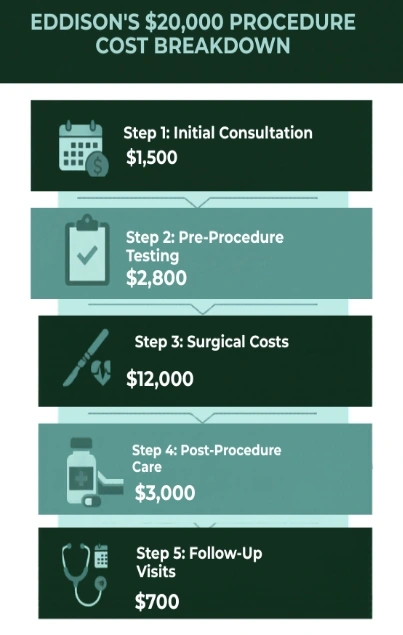
Let us make this real with a story. Meet Eddison. He has to have a medical procedure that costs $20,000 to perform. His health plan has the following provisions:
Deductible: $2,500
Coinsurance: 20%
Out-of-pocket maximum: $5,000
Step by Step: What Eddison Actually Pays
Step 1 (Deductible): Eddison pays the first $2,500 before insurance contributes anything.
Step 2 (Coinsurance): Eddison pays
Step 3 (The Cap Kicks In): His total would be $6,000. But his out-of-pocket maximum is $5,000. So he only pays $5,000, and his insurance covers the remaining $15,000.
That $1,000 difference is the cap at work. And if Eddison needed more care later that same year, his insurance would cover 100% of those covered costs. This is exactly why understanding cost sharing in insurance can protect you and your family from serious financial strain.
Coinsurance vs Copay vs Deductible: Know the Difference
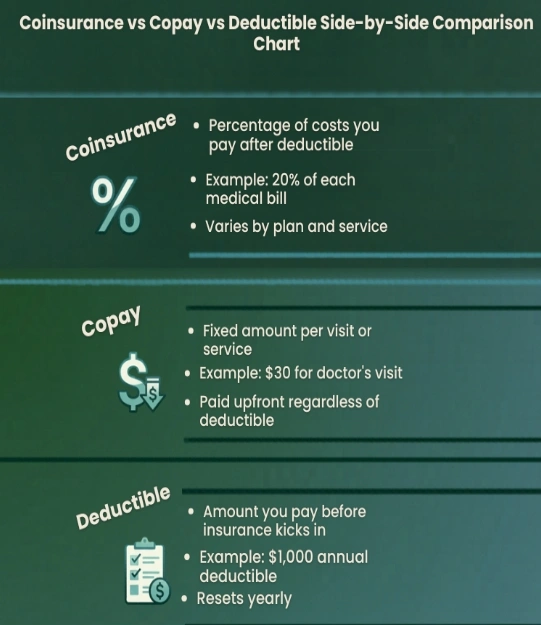
These three terms show up on almost every insurance card and bill, but most people use them interchangeably. They are not the same and can cause a lot of confusion for your hospital bill with insurance.
Deductible: This is the cost you pay before the insurance starts paying. This can be compared to the entrance fee.
Copay: This is the cost you pay for a doctor visit with insurance, for example, $40.
It stays the same regardless of the total bill.
Coinsurance: This is a percentage of which you will be responsible for once you have paid your deductible.
If you have a coinsurance of 20%, it means you will be responsible for 20% of the service, and insurance will cover the other 80%.
Your maximum amount includes all three costs for services covered through your network.This is the clear breakdown of coinsurance, copay, and deductible, and how they all relate to your overall picture.
What Does NOT Count Toward Your Maximum?
This is where a lot of people end up with surprise medical bills they did not see coming. Not everything you pay throughout the year moves the needle on your cap.
Monthly premiums: You keep paying these even after you hit your maximum. They never count toward it.
Out of Network Care: Getting care from a provider who is not part of your plan’s network means those costs do not count. This is the number one source of surprise medical bills in Texas.
Non-Covered Services: Services your plan does not cover, like cosmetic surgery, are all on you and do not count.
Preventive Care: Checkups and vaccinations are usually covered at no cost under ACA-compliant plans, so there is nothing to fill in.
Balance Billing: If an out-of-network provider charges more than your insurer is willing to pay, those extra fees do not count toward your maximum.
Understanding all of these is part of understanding how to deal with medical bills without surprise. If you are looking for ways on how to pay medical bills without insurance or even if you have insurance but it does not cover much, all of these are more important than ever.
What Happens the Moment You Hit Your Maximum?
The day you reach your out-of-pocket maximum is a good day for your finances. This is because, from this point onward, your responsibility for covered in-network services will be zero for the remainder of the year.
Once you hit your out-of-pocket maximum, you no longer pay a deductible, copays, or coinsurance. Your insurance pays 100% of covered costs.
This is especially valuable if you are facing ongoing treatment, a planned surgery cost with insurance, or frequent diagnostic test costs. A lot of smart patients use this knowledge for proactive healthcare financial planning by timing elective procedures after they have already reached their cap earlier in the year.
Use a health insurance cost estimator on your insurer’s website or app to track how close you are to your limit at any time during the year.
A Texas Note: Cost-Sharing Reductions That Can Help You
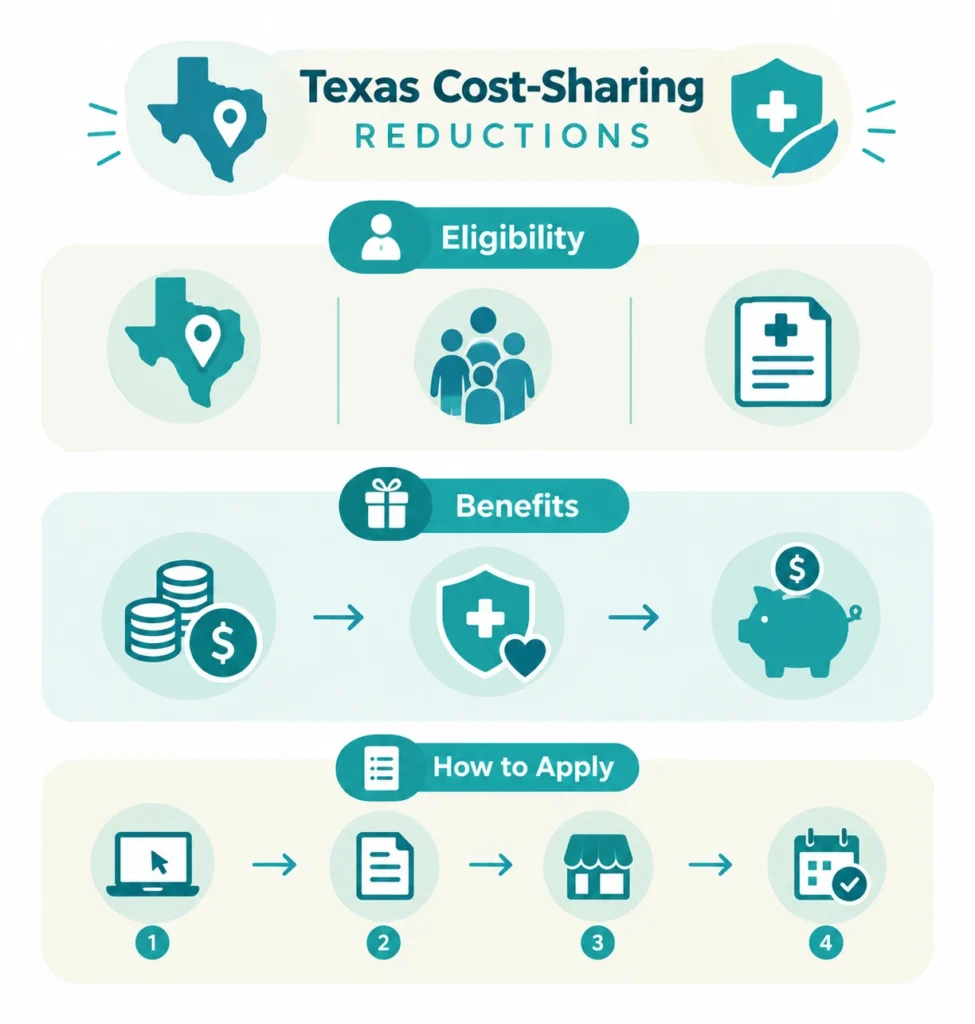
If you are a Texas resident with a certain income level, you may qualify for cost-sharing reductions through the Health Insurance Marketplace. This may help you lower your out-of-pocket maximum expenditure by a large amount To qualify, you need to meet income requirements and enroll in a Silver tier plan on the Marketplace. This is one of the most underused forms of medical bill assistance available to Texas residents, and many people do not know they qualify until someone walks them through it.
The cost sharing of Medicaid works a little differently but can still save Texans money out of pocket. If you think you may be able to take advantage of this, it is worth checking at healthcare.gov or the Texas Health and Human Services Commission.
Healthcare cost transparency has improved over the last several years, and you now have more resources to understand the actual cost of your care before you receive it.
Practical Ways to Use This Knowledge Right Now
Understanding the terms is one thing. Putting them to work to reduce healthcare costs is where the real value is. Here are some moves that make a difference:
- Track your spending throughout the year. Ask your insurer how much you have applied toward your maximum so far.
- Always stay in-network. This is the single most effective way to avoid surprise medical bills and make every dollar count
- Time elective care strategically. After you have met your deductible, other procedures should be considered before December 31
- Compare urgent care cost vs er options. A doctor’s visit cost at an urgent care center is typically much lower than an emergency room’s cost for non-emergency situations.
- Ask about medical bill assistance. Many Texas hospitals offer payment plans and tips for negotiating medical bills if you simply ask the hospital billing department.
- If you are uninsured and want to know how to pay medical bills without insurance, you may want to consider community health centers and hospital assistance programs offered through nonprofit agencies and healthcare cost transparency resources offered through the state of Texas and federally qualified healthcare centers.
It is the most you will pay for covered healthcare in one plan year. Once you hit that limit, your insurance covers 100% of eligible costs for the rest of the year. It is your built-in protection against overwhelming medical billing costs.
No. Monthly premiums are separate. You keep paying them no matter how much care you use. Only deductibles, copays, and coinsurance for covered in-network services go toward your cap.
Deductible is the amount of money that must be paid before the insurance kicks in. Copay is the fixed cost per visit. Coinsurance is the percentage cost after the deductible is paid. They are all part of the out-of-pocket maximum for covered services from a network provider.
No, that’s the infuriating part. You do everything right, go in-network, and still get billed by an out-of-network anesthesiologist or specialist you never chose. That money doesn’t count toward your max. Insurance treats it like it never happened. Protect yourself: before any procedure, call and ask about every provider involved.
Yes. Marketplace cost-sharing reductions can lower your cap, but only on Silver plans. Bronze or Gold, and that benefit disappears. Also check Medicaid many Texans assume they don’t qualify without checking. Both can seriously cut what you’d pay in a bad year. Worth 20 minutes to look up.
Know Your Costs, Control Your Care With Integrate Point
Understanding out-of-pocket maximums isn’t just about memorizing numbers. It’s about protecting yourself and planning ahead so one medical emergency doesn’t wreck your finances. Once you know your limits, you stop reacting to bills and start making smart choices. This matters even more in Texas, where healthcare costs shift based on your zip code, your plan, and your provider.
Need help understanding your marketplace options, your out-of-pocket limits, or medical bill assistance programs in Texas? Integrate Point helps clinics and patients cut through the confusion. Reach out today and let us make healthcare simpler for you.