If you’ve ever been put in a shift at an urgent care clinic in Texas whether in Dallas, Houston, or a small town, you know the routine: the doors open and you prepare for the day’s irregular flow. One minute it’s slow, the next you’re dealing with a waiting room full of patients ranging from sudden-onset fevers to sprained ankles. The mission is always clear – provide fast, effective care.
But the truth? Your committed staff are too often swamped in an ocean of paperwork, diverting them from what they excel at: assisting patients.
This perpetual juggling act, particularly in a busy walk-in clinic setting, can create bottlenecks, delayed wait times, and even burnout for your frontline staff. So how can your Texas urgent care center continue its quick response and high-quality service without increasing your physical footprint or breaking the bank? The solution for many has proven to be an absolute game-changer: Remote Virtual Assistants (VAs).
What Is a Virtual Assistant in Healthcare?
A healthcare virtual assistant is an offsite, trained staff member who takes care of your administrative workload from a distance—typically working out of a safe home office or centralized facility. The best part? They’re HIPAA-compliant, know medical workflows inside and out, and on call when your clinic needs them most.
The Urgent Care Pressure Cooker: A Daily Reality
Urgent care centers operate at a different rhythm than traditional primary care centers. There are no neatly scheduled days; each hour sees new, unexpected demands. This sets certain challenges:
- Unpredictable Volume: You can’t always man perfectly to accommodate sudden rushes of walk-ins.
- Rapid Patient Turnover: Each patient must have rapid registration, evaluation, and release.
- High Administrative Burden: Every visit creates a chain of work, from intake forms to billing codes.
- Staff Overload: Clinical staff usually intervene in performing administrative work, taking their mind off medical activities.
This is precisely where a remote virtual assistant becomes an invaluable asset. They easily fit into your staff, operating from home to manage important administrative tasks so that your in-clinic staff can concentrate on the immediate matters of your patients.
The patient pain points
- Patients who walk in expect rapid service—waiting in line, being told “wait here while we check you in” or “we’re verifying your insurance” degrades trust.
- Mis-scheduled appointments or missing follow-ups create frustration and lower satisfaction.
- Insurance surprises or billing confusion affect patient experience and loyalty.
What the data shows
- A 2025 MGMA Stat poll found only 19% of medical group practices currently use any form of virtual assistant or chatbot. MGMA
- According to an American Medical Association article, virtual assistants in private practices helped reduce administrative burden and improve patient access. American Medical Association
- A market forecast shows that the global “healthcare virtual assistants” market was valued at around US$1.7 billion in 2025 and is projected to grow significantly by 2035.
The takeaway: Adoption is still low, which means opportunity is high, especially urgent care centers ready to modernize.
VAs to the Rescue: Key Roles for a Smoother Clinic
Remote VAs are not generic assistants; most have specific healthcare administrative experience, which makes them an ideal fit for the high-speed urgent care setting. Here are a few ways they can particularly revolutionize your clinic’s productivity:
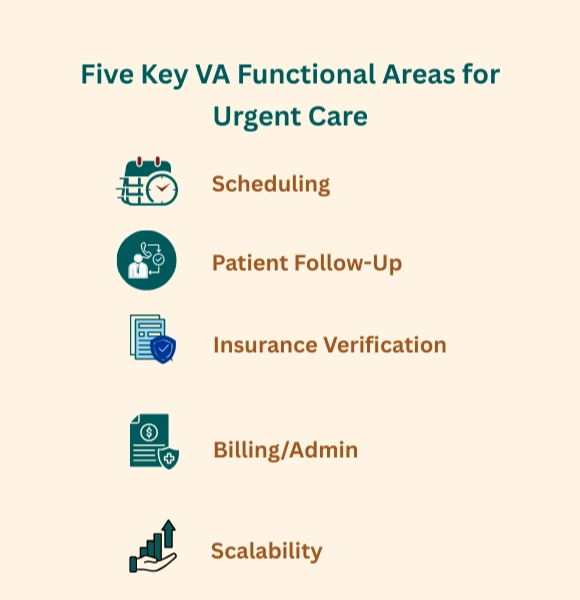
1. Smooth Scheduling & Patient Intake
Visualize your front desk to be more about greeting patients and less about paperwork.
- Appointment Management: For those who like to schedule ahead by phone or online, VAs can effectively manage your calendar of appointments, perform reschedules and cancellations, maintain smooth flow and limit overbooking.
- Pre-Registration & Data Capture: A patient need not even cross your threshold before the intake process can be started by a VA. They can gather requisite demographic data, medical history, insurance information, and pre-filling forms in your EHR system. It cuts down the waiting room paperwork filling time by quite a bit.
- New Patient Onboarding: VAs can welcome patients by email, give them directions, and respond to frequently asked questions, making the initial visit more convenient and comforting for patients.
2. Pre-Active Insurance Verification
Incomplete or inaccurate insurance verification is one of the largest time wasters and causes of denied claims. VAs shine in this area.
- Eligibility & Benefits Checks: Prior to the patient being seen, a VA can check their insurance eligibility and their individual benefits, co-pays, and deductibles. This eliminates surprises for the patient as well as your billing staff.
- Prior Authorization Initiation & Tracking: In services that have prior authorization (a frequent bottleneck, as we all know!), VAs initiate requests, monitor their status, and follow up with payers. They can assist in gathering documentation as needed and even identify potential problems prior to denials, reducing treatment delays significantly.
- Patient Financial Counseling: With up-to-date benefit information available, VAs are able to assist in clarifying a patient’s financial obligation, eliminating confusion and enhancing point-of-service collections.
3. Enhancing Overall Clinic Flow
In addition to these fundamental tasks, VAs add to a smoother and patient-centric practice:
- Answering Non-Clinical Calls: Liberate your on-site employees by allowing VAs to answer regular questions, confirm appointments, and provide general information.
- Referral Management: VAs may handle outbound referrals, align with specialists, and transfer all required patient data securely.
- Data Entry & Chart Auditing: They may aid in entering data accurately into your EHR, getting patient charts updated and complete, and even do simple chart auditing for compliance.
4. Front Desk Overflow
During peak hours, phone calls and patient questions don’t stop. A virtual VA can serve as your virtual extension of your front desk: managing calls, basic questions, forwarding messages, and more. They’re particularly useful during:
- Lunch breaks
- Staff shortages
- After-hours or early morning rushes
The Texas-Sized Advantages for Your Walk-in Clinic
For Texas’s road warriors and busy walk-in clinics, harnessing remote virtual assistants provides a plethora of benefits:
- Lower Overhead: Save money – no equipment or square footage required.
- Better Patient Experience: Quick wait times, streamlined intake, and proactive communication translate to increased patient satisfaction and loyalty.
- Boosted Staff Efficiency & Morale: Free your clinical staff to prioritize patient care, minimizing their administrative workload and avoiding burnout.
- Improved Revenue Cycle: Real-time insurance verification and efficient prior authorizations result in lower denials and quicker reimbursements.
- Unmatched Flexibility: Scale your administrative support up or down quickly with patient volume, without the hassle of full-time employee hiring.
The Payoff: Why It’s Worth It for Patients
Implementing virtual assistant support means:
- Faster scheduling, fewer hold times, clearer communication.
- Reduced confusion about insurance and billing.
- Better consistency during busy periods; their wait times go down.
- The impression of a modern, responsive clinic that values their time and care.
- Happier patients who come back (and refer others)
Together, the wins build up improved patient satisfaction and lead to better retention, better reviews, stronger reputation, and improved financial performance.
Real-World Case Example
An urgent care chain deployed remote virtual assistants for scheduling, verification and follow-up. Within six months:
- No-show rate dropped by 18%.
- Average insurance verification time dropped from 2.6 hours to 45 minutes.
- Billing claim denials fell by 22%.
- Staff reported a 30% reduction in time spent on administration and an increase in time with patients.
This shows what real clinics can achieve when remote VAs are deployed thoughtfully.
Final Thought
Running an urgent care clinic in Texas means staying quick on your feet, but you don’t have to do it alone. Remote virtual assistants are one of the easiest ways to reduce your admin load, improve patient flow, and reclaim time for what matters most: quality care.
Want to explore how virtual assistants can support your urgent care center?
At Integrate Point, we help Texas-based clinics build custom support teams that fit their exact needs, from scheduling to insurance verification and more.
Schedule a free consultation with our team. Let’s explore how your clinic can benefit from remote VA support and walk you through a roadmap tailored to your urgent-care environment.