
You get mail from your insurance with numbers, codes, and terms you don’t understand. Is this a bill? Do you owe money? This is your explanation of benefits, or EOB. You’re not alone if it confuses you. Here’s the good news: understanding your EOB takes just minutes. Knowing how to read it means catching billing errors, tracking your deductible, and managing healthcare costs smarter.
Key Takeaway:
- EOB is not a bill but an explanation of your claim and how it was processed
- Understanding your EOB means that helps catch billing errors and prevent overpayments
- EOB tracks your progress toward your deductible and out-of-pocket maximum
- EOB codes explain coverage decisions and why claims were handled certain ways
- Keeping EOB statements organized helps with taxes and future healthcare planning
What Exactly Is an Explanation of Benefits?
An eob in medical billing is a document your insurance company sends you after you receive healthcare. It details what happened with your claim, shows what was billed and what your insurance paid. It shows what you might owe.
Think of it as a scorecard. Your doctor provides a service. They bill your insurance. Insurance reviews the bill. They decide what they’ll pay and what you’re responsible for. The explanation of benefits tells you all of this.
Here’s what confuses people. An EOB is not a bill. It’s not asking you to pay anything. It’s simply explaining what happened with your insurance claim. Sometimes you owe money after reading your EOB. Sometimes you don’t. The EOB tells you which situation applies to you.
Insurance companies are required by law to send you an EOB after every claim. This keeps the process transparent. You know what’s happening with your healthcare costs. You can see whether your insurance is actually paying what you think they should.

Why Your Insurance Company Sends You an EOB
Understanding what your explanation of benefits means requires understanding why insurers send them. Your insurance company wants to keep you informed. They want you to understand what services you received, what was billed, and what coverage was applied.
But there’s another reason. The explanation of benefits protects both you and the insurance company. It creates a paper trail. It documents exactly what happened with your claim. If there’s ever a dispute, both you and the insurance company have the same record of everything you communicated with each other.
Your explanation of benefits sample will include specific information every time. The format varies slightly between insurance companies. But the information stays consistent. You’ll see what was billed, was allowed, was paid. You’ll see what you owe.
How to Read an Explanation of Benefits Without Getting Lost
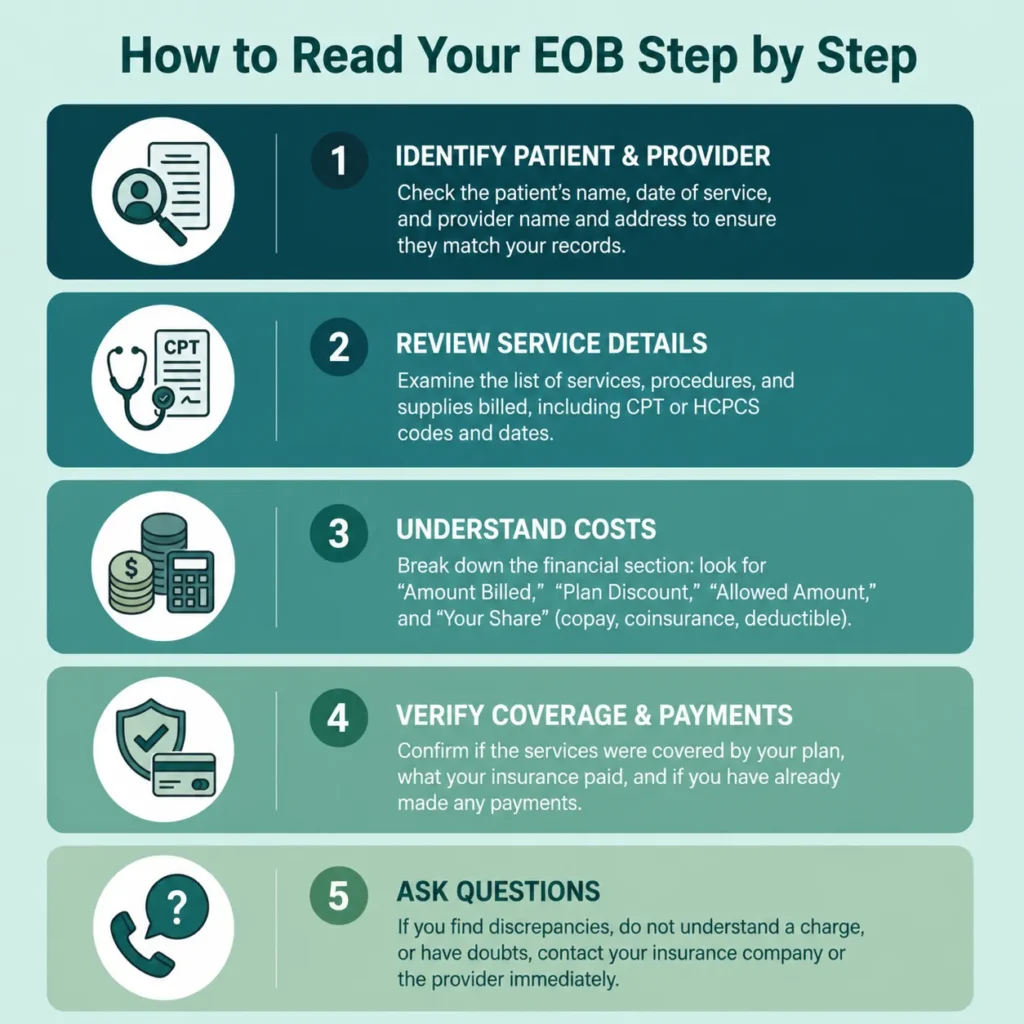
Reading your explanation of benefits doesn’t require a medical degree. You just need to know where to look and what each section means.
Start with the patient information section. This shows your name, your member ID, and the dates of service. Verify that this is correct. Make sure the dates match when you actually received care.
Next, look at the claim details. This section lists what was done. Maybe it’s a doctor visit. Maybe it’s lab work or a procedure. The claim details show the date of service, what was provided, and how it was coded.
Then check the payment information. This section shows the amount billed by the provider. It shows the amount your insurance allows. It shows what your insurance paid. And it shows what you owe.
Finally, look at any codes on what does eob stand for. These are shorthand explanations for decisions. A code might mean something was covered in full. It might mean something exceeded your deductible. A code might mean something wasn’t covered at all. Your explanation of benefits will include a key explaining what each code means.
Understanding EOB Medical Billing Terms
Your explanation of benefits includes medical billing language that might feel foreign. But learning a few key terms helps you understand what you’re reading.
The amount billed is what your doctor charged. This might be higher than what insurance actually allows. Insurance companies negotiate rates with providers. Those rates are usually lower than what providers bill.
The allowed amount is what your insurance company considers reasonable for that service. This is what the explanation of benefits uses to calculate what you owe.
Your deductible is the amount you must pay yourself before your insurance starts helping. If you haven’t met your deductible yet, you might owe the full allowed amount.
Coinsurance is a percentage of costs you pay after meeting your deductible. If you have twenty percent coinsurance, you pay twenty percent and insurance pays eighty percent.
Out of pocket maximum is the most you’ll pay in a year for covered services. After you hit this number, insurance pays one hundred percent.
What Does EOB Mean in Medical Billing?
In medical billing, an explanation of benefits shows how a claim was processed. It’s the trail that explains what happened to your claim from start to finish.
The explanation of benefits shows the billed amount. It shows adjustments or discounts applied. It shows what your insurance paid the provider, what you might owe, also why things happened the way they did.
This matters because billing errors happen. Providers might bill wrong. Insurance might apply the wrong deductible. You might get billed for something that should have been covered. Your explanation of benefits is how you catch these errors.
How to Use Your Explanation of Benefits to Spot Errors
Getting good at reading your eob means you can protect yourself from overpaying. Here’s what you should check every time you get one.
First, verify the dates. Make sure the dates of service match when you actually went to your doctor or got your procedure.
Second, verify the service description. Make sure the service listed is actually what you received.
Third, check the amounts. Check whether the billed amount matches your expectations. Verify that the allowed amount seems reasonable for the service. Make sure the insurance payment aligns with those numbers.
Fourth, check your responsibility. Does the amount you owe match what you expected based on your deductible and coinsurance?
If anything looks wrong, contact your insurance company. Ask them to explain. If there’s a genuine error, ask them to correct it.
Different Insurance Companies and Their Explanation of Benefits
Your explanation of benefits format depends on which insurance company you have. Let me walk through some common ones you might encounter in Texas.
Blue Cross Blue Shield EOB statements are usually pretty clear. They include visual breakdowns showing what was covered and what wasn’t. The Blue Cross explanation of benefits typically explains things in plain language.
Humana explanation of benefits statements often include comparison charts. They show what you paid versus what other patients typically pay for the same service. Humana also includes glossaries explaining confusing terms.
Medicare explanation of benefits statements work differently because Medicare operates differently. Medicare explanation of benefits online is available for Medicare Advantage Plans. You can view it on Medicare’s website. Medicare explanation of benefits sample will show prescription drug usage if you’re on Medicare Part D.
Medicaid explanation of benefits statements vary by state. Texas Medicaid works slightly differently than other states.But all Medicaid explanation of benefits statements show you the same basic information: what your coverage paid for and what you owe.
Why Your Explanation of Benefits Matters for Tracking Costs
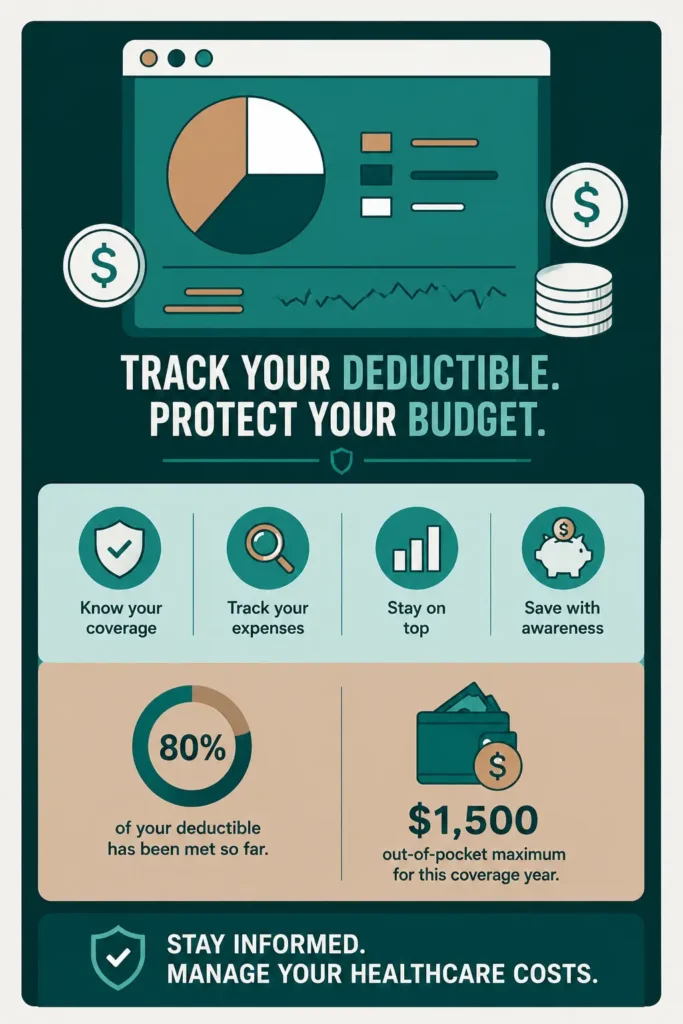
Your explanation of benefits tells you exactly how much progress you’ve made toward your deductible and out of pocket maximum. This matters because hitting these numbers changes how much you pay for future care.
For example, you might need several doctor visits before hitting your deductible. Your explanation of benefits shows this progress. Once you understand the pattern, you can anticipate what future visits will cost.
Your explanation of benefits also helps you understand your coverage. Maybe you didn’t realize a service wasn’t covered. The explanation of benefits shows you. Now you know for next time. You can plan accordingly.
Special Considerations for Texas Patients
In Texas, both private insurance and government programs like Medicaid are available. Understanding your specific explanation of benefits depends partly on which program you’re in.
If you have a commercial insurance plan through an employer or the marketplace, your explanation of benefits will show deductibles, copays, and coinsurance.
If you’re on Texas Medicaid, your explanation of benefits might look different. Medicaid often has minimal or no copays. Your explanation of benefits focuses more on what was covered than what you owe.
If you’re on Medicare in Texas, your explanation of benefits will show Medicare-specific coverage rules.
No matter which program you’re in, your explanation of benefits is your tool for understanding and managing your healthcare costs.
Keeping Your Explanation of Benefits Organized
Don’t throw away your explanation of benefits after you read it. Keep them organized. They’re useful for several reasons.
First, they help you track your healthcare history. If there’s ever a dispute about what you paid or what was covered, your explanation of benefits is your proof.
Second, they help with taxes. Some healthcare expenses are tax deductible. Your explanation of benefits documents what you spent.
Third, they help with future planning. Looking back at past explanation of benefits statements helps you estimate next year’s healthcare costs.
Keep them in a folder or file. Organize them by year. This takes just a few minutes but pays off when you need them later.
How Insurance Companies Use EOB Codes
Those alphanumeric codes on your eob statement confuse most people. But they’re actually helpful once you understand them.
These codes explain decisions. A code might mean “this service requires prior authorization.” Another code might mean “this service isn’t covered by your plan.” Another might mean “this service is covered but you haven’t met your deductible yet.”
Your explanation of benefits should include a key explaining what each code means. If it doesn’t, call your insurance company and ask them to explain any code you don’t understand.
Learning what these codes mean helps you understand your coverage and anticipate what you’ll owe for future services.
Check whether it’s asking for payment or just informing you. Most explanation of benefits statements don’t require immediate payment. Contact your insurance company if you’re unsure whether you actually owe the amount shown.
Yes. If you think there’s an error, contact your insurance company immediately. They can review the claim and correct errors if they find them. Keep documentation supporting your dispute.
Contact both your insurance company and your doctor’s office. Explain the discrepancy. Ask both to review their records. One of them can usually resolve the issue.
Keep them for at least one year. Some healthcare professionals recommend keeping them for three to seven years for tax and record-keeping purposes.
Call your insurance company’s customer service. Ask them to explain the code. They can tell you exactly what it means and why it was applied to your claim.
Key Takeaways About Understanding Your Explanation of Benefits
Your explanation of benefits is a tool, not a bill. It explains what happened with your insurance claim. Understanding what your explanation of benefits means helps you manage your healthcare costs and catch billing errors.
Learning how to read an explanation of benefits takes practice, but it gets easier each time. Start by checking the basic information. Verify dates, services, and amounts. Ask your insurance company if anything seems wrong.
Keep your explanation of benefits statements organized. They document your healthcare costs and coverage. They’re useful for taxes, future planning, and resolving billing disputes.
Your explanation of benefits contains codes that explain how your claim was processed. Learning what these codes mean helps you understand your coverage better.
Taking time to understand your explanation of benefits empowers you as a patient. You’re no longer confused by healthcare documentation. You understand your costs, spot errors. You can plan better for future healthcare needs.