
You need a procedure. Your doctor says it’s important. But your insurance company says they need to approve it first. So, you wait. And wait. Days turn into weeks. Meanwhile, you’re still dealing with your health problems.
This is the frustration of prior authorization. But here’s some good news. In 2026, everything is changing. Insurance companies are completely overhauling how prior authorization works. The changes mean faster approval. Fewer delays. Better access to the care you needs.
If you live in Texas, especially in Wylie or the Dallas Fort Worth area, these changes directly affect you. Let me walk you through what’s changing, why it matters, and what you actually need to do.
Key takeaway:
- Routine prior authorizations now approved in minutes, not weeks
- Electronic systems replace paper and phone calls
- AI reviews requests against medical guidelines instantly
- Complex cases decided in 2 days instead of 7-14 days
- Emergency approvals within 72 hours for Medicare
- Texas law requires clear denial explanations
- All major insurers implementing automated systems in 2026
What Is Prior Authorization? Why It Matters
Prior authorization is when your insurance company reviews your treatment before you get it. Your doctor wants to give you medication or procedure. They contact your insurance. Insurance checks their records. They decide whether to approve it. Then you can proceed.
This system exists to control costs. Insurance companies don’t want to pay for unnecessary care. They want to make sure treatments make sense. That’s the theory anyway. In practice, prior authorization often just delays care without improving it.
The process creates headaches for everyone. Doctors spend hours on the phone with insurance companies. Staff members handle paperwork and phone calls. Patients wait for decisions that sometimes never come. For people with serious conditions, these delays can actually matter.
That’s why changes are coming. And not just small tweaks. Major insurance companies and the government are completely rethinking prior authorization in 2026.
The Big Changes Coming in 2026
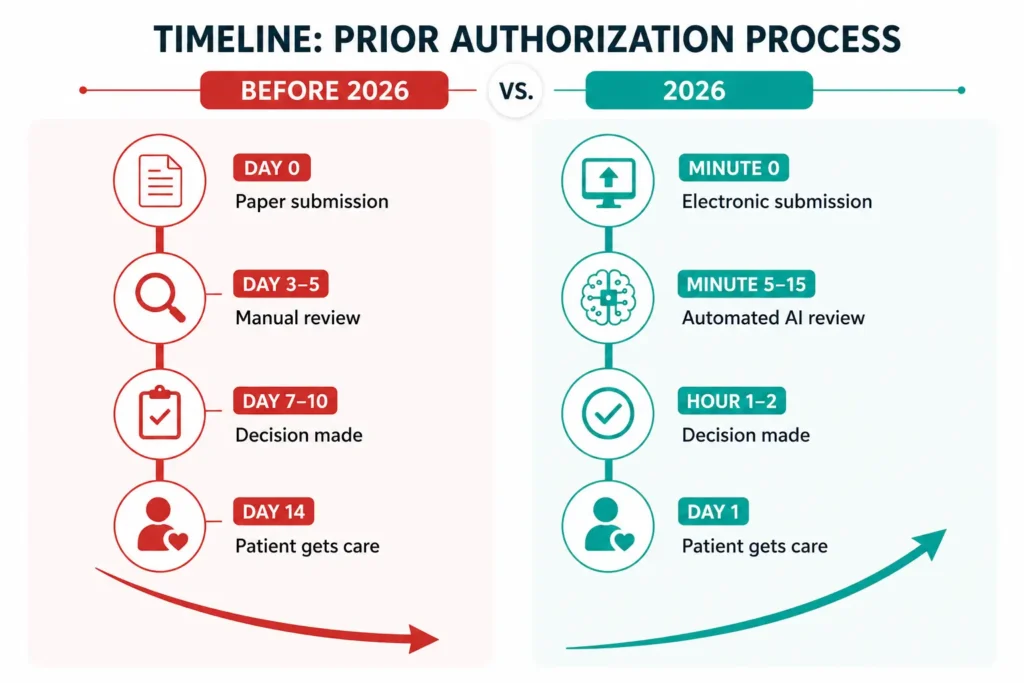
Insurance companies are moving from paper and phone calls to digital systems. Cigna prior authorization, United Healthcare prior authorization, and Aetna prior authorization are all being redesigned. These companies are implementing automated systems that use artificial intelligence to make decisions instantly.
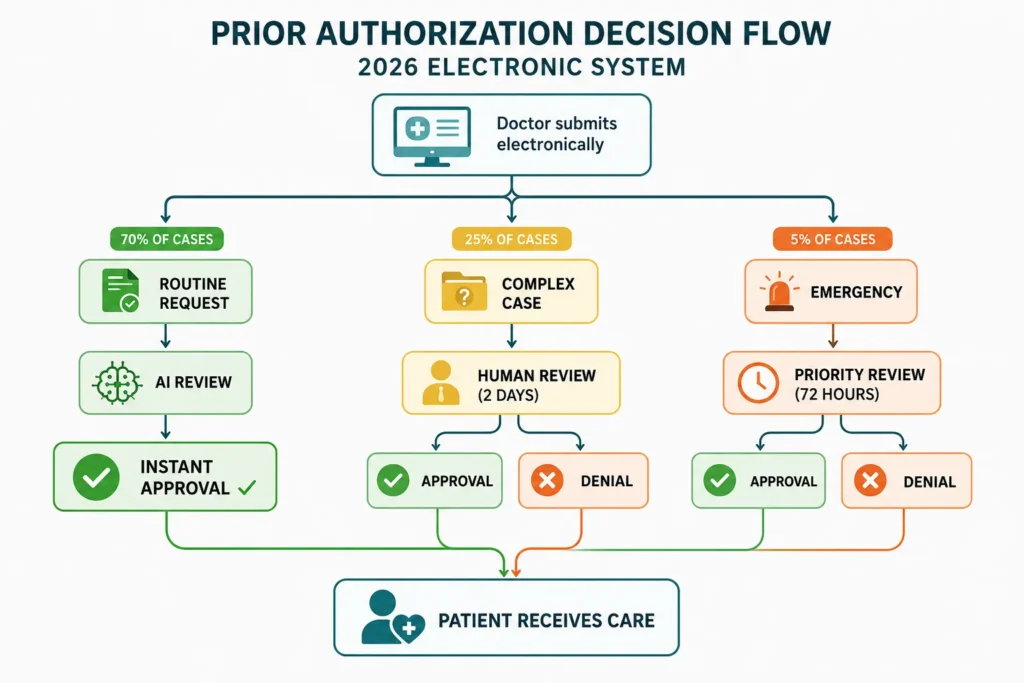
Here’s what changes. For routine approvals that clearly meet requirements, the system now says yes automatically. No humans are involved. No wait. The decision happens in seconds or minutes instead of days or weeks.
For complex cases that need human review, the new systems work faster. Instead of someone manually checking paperwork for days, they use technology to organize information and present it clearly. Decisions that used to take a week now happen in two days.
The government is requiring Medicare prior authorization changes. Medicare prior authorization list has been revised. Thousands of routine procedures no longer need approval at all. Humana Medicare prior authorization and other Medicare plans are making decisions faster. The new rule requires Medicare decisions within seventy-two hours for urgent requests and seven days for routine ones.
What an Electronic Prior Authorization Works
Electronic prior authorization is fundamentally different from the old system. Instead of paper forms and phone calls, everything happens digitally.
Your doctor’s office submits a request directly from their computer system. The insurance company’s system receives it automatically. Software checks whether the request meets their medical guidelines. If it does, the system approves it immediately. Your doctor gets an answer in minutes.
This automation eliminates so much confusion. There’s no wondering if your request was received. No calling to check status. No confusion about requirements. The electronic system handles everything transparently.
Insurance companies implemented this because it actually saves them money. Less staff time means lower costs. Faster approvals mean patients get treatment sooner, which sometimes prevents more expensive problems later. So this change benefits everyone.
What Texas Specific Changes Are Coming
Texas prior authorization laws 2026 introduced new state level requirements. These rules work alongside the federal changes to create a more patient friendly system.
Texas law now requires insurers to provide clear information about what prior authorization is needed and why. If insurance denies something, they must explain their reasoning in plain language. This transparency helps patients and doctors understand coverage decisions.
The law also shortens response timelines in Texas. Insurance companies have stricter deadlines for making decisions. This prevents the endless waiting that used to happen.
For people in Wylie and the DFW area, these changes mean faster access to specialists. You can see doctors and get treatments without unnecessary delays.
Medicaid and Medicare Changes
Medicaid prior authorization is changing significantly. Many services no longer need approval at all. Mental health services, preventive care, and chronic disease management are automatically covered for most patients. This removes barriers to care for people with limited income.
When Medicaid prior authorization is still required, the new automated systems handle it. Decisions for routine medications happen in minutes. For complex cases, decisions happen in days instead of weeks.
Medicare prior authorization changes are equally important for seniors. Humana Medicare prior authorization and other Medicare plans are speeding up approvals. The new Medicare prior authorization list removes many routine procedures from needing approval.
Seniors in Wylie can now get cancer screenings, heart tests, and other important procedures without delays. This matters because early detection saves lives. These reforms remove barriers that sometimes prevented people from getting timely medical care.
Major Insurance Companies and Their Reforms
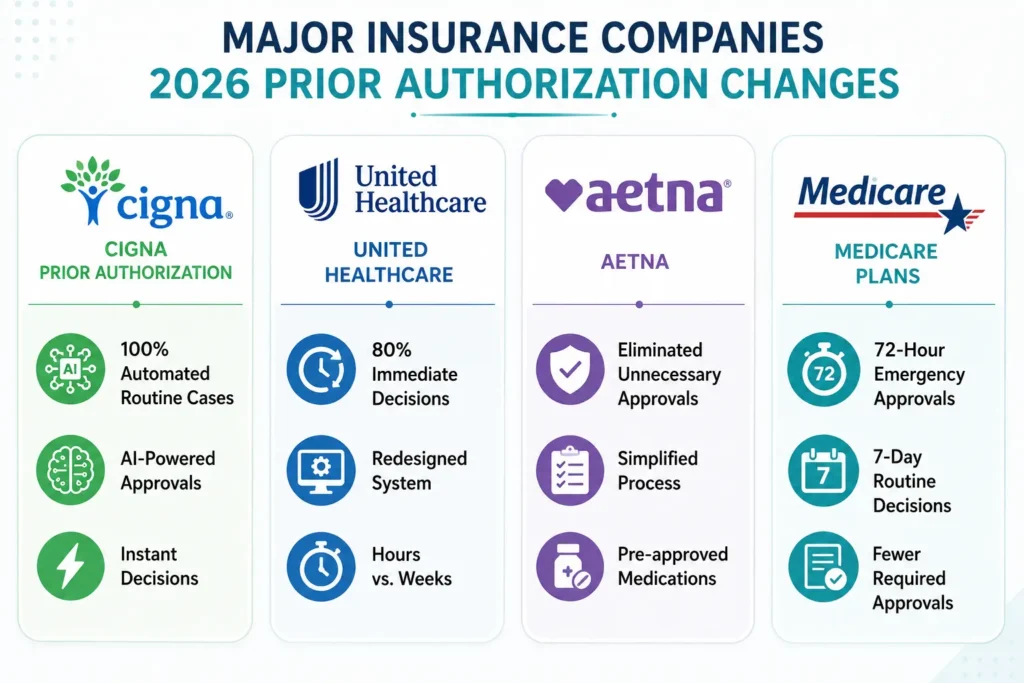
Cigna prior authorization is now fully automated for routine approvals. Their system uses artificial intelligence to review requests against medical guidelines. Routine cases get approved instantly. This means patients can start medications or get procedures scheduled immediately.
United Healthcare prior authorization has completely redesigned their system. They now provide immediate decisions for eighty percent of requests. That’s a huge improvement from the old system where most things took days or weeks.
Aetna prior authorization changes focus on simplicity. They eliminated prior authorization requirements for many common procedures and medications. If something has a strong safety record and is used routinely, they don’t require approval anymore. Your doctor just orders it and you get it.
These companies made these changes because they realized prior authorization wasn’t controlling costs effectively. And it frustrated everyone involved. The new approach works better for patients, doctors, and insurance companies.
The Impact on Healthcare Providers
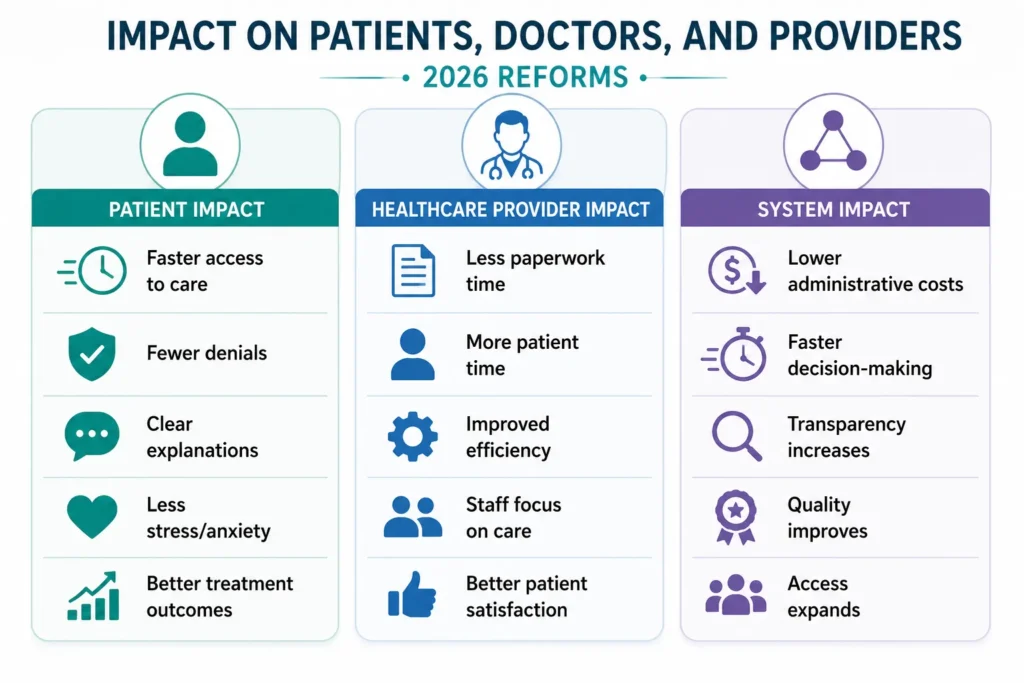
Healthcare providers like those in Wylie are experiencing real benefits. Medical staff spend less time on prior authorization paperwork. Doctors have more time to actually treat patients. Administrative staff focus on other important work instead of endless phone calls to insurance companies.
This improves practice efficiency. Providers can see more patients and provide better care. Smaller practices especially benefit because they don’t have dedicated staff just for insurance issues.
Healthcare providers also gain transparency. The electronic systems show exactly what’s required and where requests stand. No more wondering whether something was received or approved. The digital trail makes everything clear.
Better Outcomes for Patients
These reforms ultimately mean better outcomes for you. Here’s what changes in your actual experience.
Your doctor recommends a treatment. You get an answer about approval quickly. If approved, you schedule immediately. No weeks of waiting wondering whether you’ll get covered.
If something is denied, you get a clear explanation. You understand why. You and your doctor can discuss alternatives or appeal the decision.
For chronic conditions, you’re not constantly re authorizing treatments you already take. Medications that work get approved routinely. You can focus on managing your health instead of battling your insurance.
For serious conditions like cancer or heart disease, faster approvals mean faster treatment. That matters. Early treatment often means better outcomes.
DFW Area Specific Changes
For people in Dallas, Fort Worth, Plano, Arlington, and surrounding areas including Wylie, these reforms create consistent standards across the entire metroplex. Major hospitals like UT Southwestern, Baylor Scott and White, and Texas Health Resources are all implementing the same streamlined systems.
This means if you see doctors at different hospitals, you get consistent treatment regarding approvals. You don’t have to figure out different rules for different providers.
Specialists throughout the DFW area are trained on the new systems. Whether you see a cardiologist in Dallas or a specialist in Wylie, they understand the modern processes. This makes your experience smoother.
Rural and suburban providers in Texas are getting the same tools as major urban centers. This equalizes access throughout the state. A clinic in Wylie now has the same capabilities as major Dallas medical centers.
What You Should Do Now
Don’t wait for confusion. Educate yourself about the changes. Ask your doctor’s office about their new authorization processes. Ask your insurance company specifically about your coverage.
Keep documentation of your insurance coverage. Save copies of approval letters. When they come electronically, print them. This creates your record.
If something is denied, ask for an explanation. Request an appeal if you disagree. The new systems make appeals easier because everything is documented electronically.
Stay aware of changes to your specific insurance plan. Insurance companies are updating their rules throughout 2026. Your plan might change coverage requirements. Knowing about changes means you’re never surprised.
Understanding Insurance Reform Movement
The entire healthcare system is moving toward administrative simplification. Prior authorization is one piece of this larger shift. Insurance companies are reducing unnecessary approvals across the board.
The American Health Insurance Plans organization and other industry groups endorsed these changes. They recognized that prior authorization was creating barriers without meaningful benefit.
These reforms represent a genuine shift. Insurance companies are prioritizing patient outcomes over administrative control. They realized that being seen as an obstacle to care was bad for business and bad for patients.
No. Streamlined authorization means faster decisions, not more denial. Insurance still reviews requests but makes decisions quickly using consistent standards.
Routine approvals take hours or minutes. Complex cases take days instead of weeks. Emergency requests are approved within seventy-two hours for Medicare.
Nothing changes from your perspective. Your doctor submits electronically instead of on paper. You still get answers about coverage. The process is just faster and clearer.
Ask your doctor to appeal. Appeals now include clear documentation. The appeals process is also faster with electronic systems.
Major insurers are required to comply with new regulations. Most companies are voluntarily going beyond minimum requirements. Your specific plan may vary.
Prior Authorization Reforms Are Here to Stay
Prior authorization is fundamentally transforming in 2026. Electronic systems replace paperwork. AI makes routine decisions instantly. Complex cases get faster human review. Patients in Texas, especially Wylie and the DFW area, benefit directly from these changes.
Integrate Point helps healthcare providers implement these new systems smoothly. We guide practices through electronic prior authorization integration, train staff on new workflows, and connect you with insurance company platforms. Your practice gains efficiency. Your patients get more care. We handle the complexity, so you focus on medicine.
These reforms represent genuine progress toward patient-centered healthcare.