You call your insurance company. Hold for 15 minutes. Finally, someone answers. You explain your patient needs a procedure. They put you on hold again. Twenty minutes passed. They come back asking for more information. You send it. Wait for two days. Call back. They say they never received it.
This is the nightmare of manual prior authorization. It’s frustrating for doctors, patients, and insurance companies too, honestly.
But what if there was a better way? What if authorization approvals happened in minutes instead of weeks? What if everything was digital, tracked, and transparent? That’s what electronic prior authorization promises. And it was actually delivered.
If you’re wondering whether electronic PA is really better than the old manual system, the answer is yes. But here’s what you actually need to know about how it works, why it matters, and what’s really changing.
Key Takeaways:
- Electronic prior authorization approves routine cases in minutes vs. days
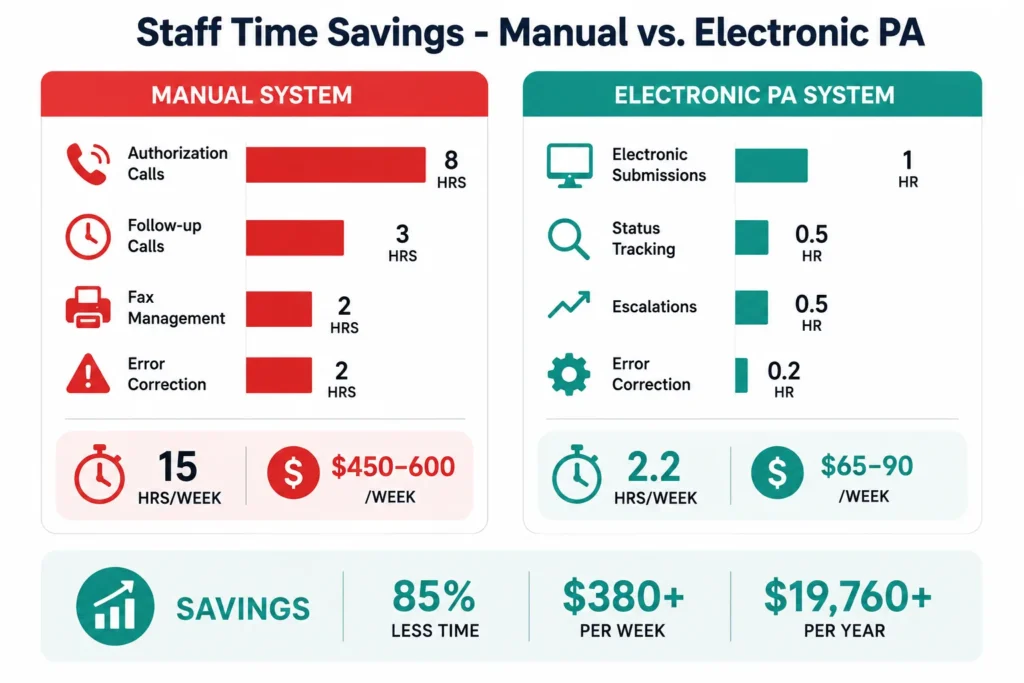
- Electronic PA reduces staff time by 80% compared to manual systems
- Automation handles 70-80% of cases; complex cases get faster human review
- Electronic authorization systems eliminate lost requests and improve accuracy
- Real-time tracking replaces uncertainty throughout prior authorization workflow
- Integration with EHR makes electronic PA seamless for doctors
- Manual prior authorization is becoming obsolete as automation improves
Understanding Prior Authorization in Healthcare
Let’s start with the basics. What is prior authorization in healthcare? It’s when your insurance company approves treatment before you get it.
Your doctor wants to prescribe medication. They want to do a procedure or refer you to a specialist, so they contact your insurance. Insurance reviews it. Insurance says yes or no. Then the treatment happens. The reason insurance does this: they want to make sure treatments make sense. They want to control costs. They want to avoid paying for unnecessary care.
In theory, this makes sense. In practice, the old manual system created delays without actually improving quality.
The Problem with Manual Prior Authorization
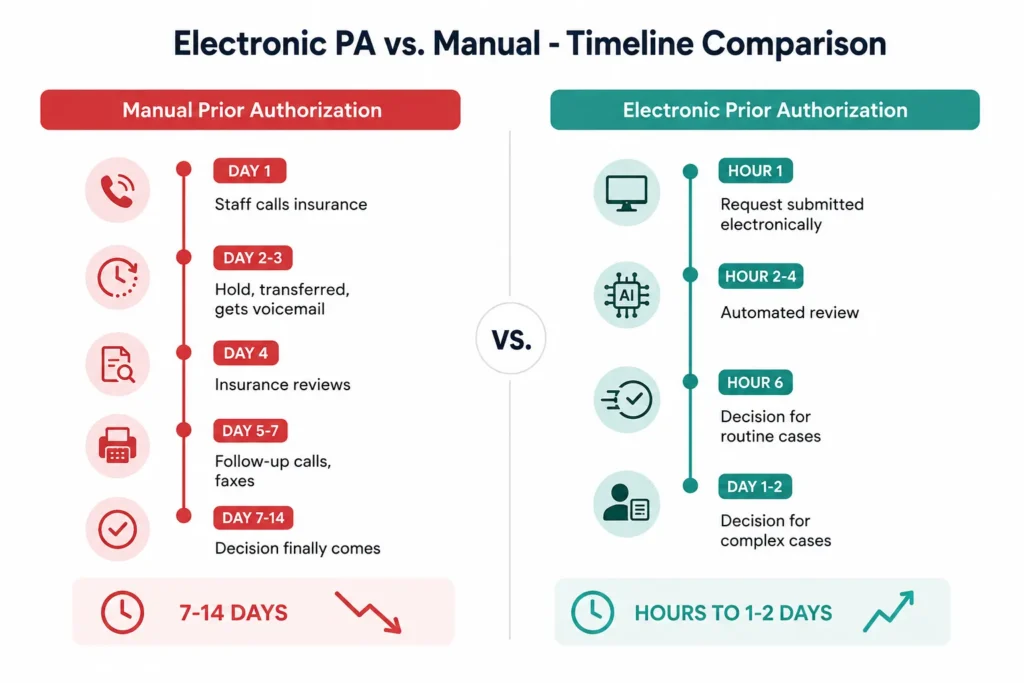
Manual healthcare prior authorization is how things worked for decades. Your doctor’s office calls. Someone answered the phone. They talk through the details. Insurance manually reviews the case. Days pass. The decision is coming back.
This process has huge problems.
- First, it takes forever. Urgent cases are delayed. Patients suffer while waiting. Some patients just give up and go without treatment.
- Second, it creates a massive administrative burden. Your doctor’s staff spends hours on calls. Insurance companies need staff just to answer phones and process paperwork. Everyone loses time.
- Third, it’s easy to lose things. Did insurance receive your fax? Is it sitting at someone’s desk? Will it ever be reviewed? Nobody knows.
- Fourth, there’s no transparency. You don’t know where your request stands. You don’t know when you’ll get an answer. You’re just waiting and hoping.
What Electronic Prior Authorization Actually Does
Electronic prior authorization is completely different. Instead of phones and paperwork, everything happens digitally.
Your doctor’s office enters the authorization request into electronic PA software. The request goes directly to the insurance system. Automated systems check whether the case meets medical guidelines.
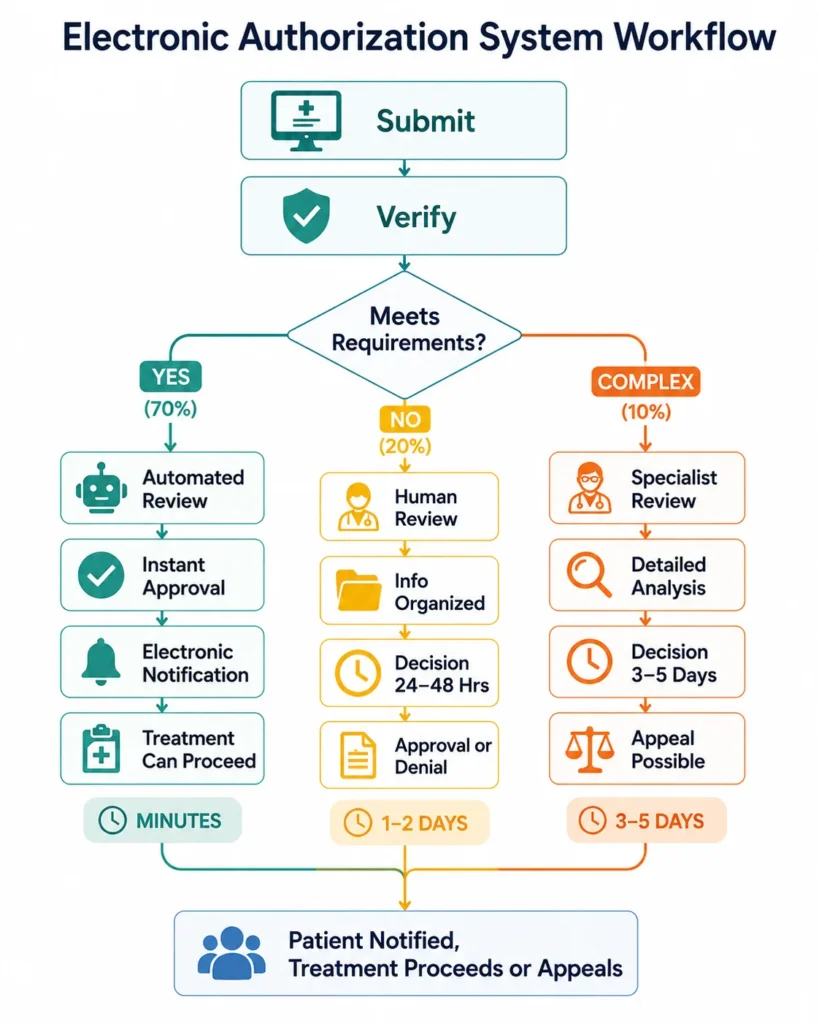
For routine cases that obviously meet requirements, the electronic authorization system approves it immediately. No humans are involved. No waiting. Decision happens in minutes.
For complex cases, the system organizes all the information and presents it clearly to a human reviewer. What used to take a human several hours to organize now takes seconds. The reviewer decides quickly. Usually within 24 to 48 hours.
This is prior authorization automation at work. Technology handles routine cases. Complex cases get human reviews with better information. Everything is tracked electronically.
Electronic PA vs. Manual: The Real Differences
Speed is an obvious difference. Electronic PA handles most requests in hours. Manual prior authorization takes days or weeks. But there are other differences that matter more.
Accuracy Improves
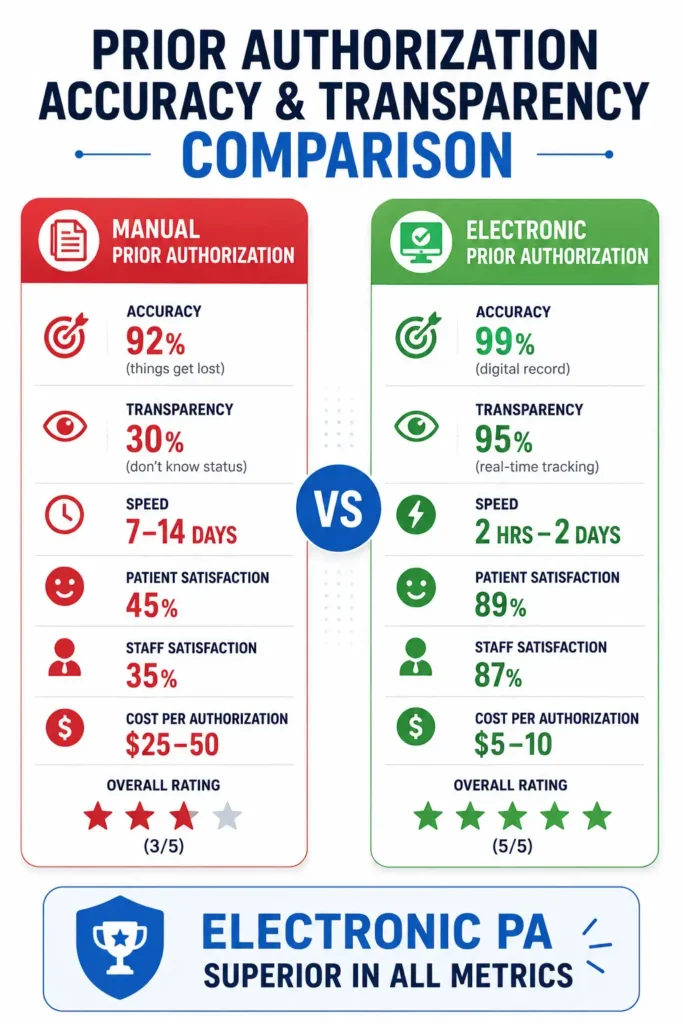
Manual systems lose things. Requests go missing. Information gets lost. Electronic authorization systems create a permanent digital record. Everything is documented. Nothing gets lost.
Transparency Becomes Real
With manual systems, you’re in the dark. You don’t know where your request is. With electronic prior authorization software, doctors can track status in real time. They see exactly where the request stands.
Staff Time Drops Dramatically
Manual prior authorization consumes hours of staff time. Phone calls. Faxes. Follow-ups. Electronic PA reduces this to minutes per request. Staff can focus on actual patient care instead of chasing authorizations.
Costs Drop
Insurance companies save money on staff. Doctors’ offices save money on staff time. Patients get treated faster, sometimes preventing more expensive problems later. Everyone benefits financially.
How Electronic Authorization Systems Work
Electronic authorization system workflow usually follows this pattern:
Your doctor’s office enters patient information and treatment details into the electronic prior authorization software. The system checks the patient’s coverage. It verifies that the treatment is covered. It checks whether medical necessity documentation is complete.
For most routine requests, the prior authorization automation approves it instantly. Insurance sends digital approval. The doctor gets a notification immediately. Patients can proceed.
For complex cases requiring human judgment, the system escalates it. A medical reviewer gets all relevant information organized and presented clearly. They make decisions quickly. Everyone knows the outcome.
Throughout the process, everyone can see status. Doctor. Patient. Insurance. No mystery. No wonder what is happening.
Precertification vs. Preauthorization: What’s the Difference?
People often confuse these terms. Precertification vs. preauthorization sometimes get used interchangeably, but they’re slightly different.
Precertification means checking in advance whether something is covered. Will insurance cover this treatment? Preauthorization means getting formal approval in advance.
In practice, they’re very similar. Both involve checking with insurance before treatment. Both should be done before the patient gets care. Electronic PA systems handle both seamlessly.
Electronic PA for Different Types of Care
It works across different healthcare settings. Medical preauthorization for standard treatments gets approved quickly through electronic PA software. Most medications, procedures, and most specialist visits. Electronic systems handle these instantly or within 24 hours.
Health insurance referrals to specialists work better with electronic systems. Doctors submit referrals electronically. Insurance reviews in minutes. Specialists get notifications. Patients schedule immediately.
Prior authorization workflow for complex cases stays with humans but gets better information through electronic authorization systems. The automation handles organizing information. Humans make final decisions. This combination works better than either system alone.
The Real-World Impact
A cardiology practice in Dallas switched from manual to electronic PA. Here’s what changed:
Before: Prior authorization took 4-7 days on average. Staff spent 12 hours weekly on authorization calls. Patients sometimes delayed treatment waiting for approval.
After: Prior authorization took 2-6 hours average. Staff spend 2 hours weekly on authorization. Patients got immediate answers.
This pattern repeats across practices. Electronic prior authorization automation delivers consistently better results than manual systems.
What’s Still Being Worked Out
Electronic PA isn’t perfect yet. Insurance companies use different systems. Not everything integrates perfectly. Some older systems still require manual steps.
But the trajectory is clear. More insurance companies implement electronic prior authorization software every year. Integration improves. Automation is getting better. The manual system is becoming obsolete.
Getting Started with Electronic PA
If your practice still uses manual systems, consider switching. Most electronic prior authorization software integrates with your EHR. Training takes hours, not days.
Talk to your EHR vendor. They probably offer electronic PA integration. Ask about automation features. Ask about real-time tracking. Make sure the electronic authorization system connects with major insurance companies you work with. For patients dealing with their own prior authorizations, ask your doctor’s office if they use electronic PA. If not, ask why not. Electronic systems serve patients better.
The Future of Prior Authorization
The trend is unmistakable. Manual prior authorization is being replaced by automated prior authorization systems. Insurance companies are investing in electronic prior authorization software. Healthcare providers are demanding better electronic PA integration.
In a few years, manual prior authorization will be rare. Electronic PA will be standard. This means faster approvals, fewer delays, and better care for patients.
Prior authorization is insurance approval before treatment. Your doctor requests authorization for medication, procedures, or specialist referrals. Insurance reviews whether treatment is medically necessary and covered. Electronic prior authorization speeds this process from weeks to hours.
Electronic PA software connects your doctor’s office directly to insurance systems. Your doctor enters treatment details. The software checks coverage and medical guidelines. Routine cases get instant electronic prior auth approval. Complex cases get human review with organized information.
Manual prior authorization involves phone calls, faxes, and waiting days. Electronic prior authorization automates routine cases, completing in minutes. Complex cases still need human review but get better information through electronic authorization systems, reducing review time from days to 24-48 hours.
Yes. Practices report 85% reduction in authorization staff time. Insurance companies process approvals 90% faster. Electronic PA reduces errors, improves transparency, and lowers costs for everyone.
Absolutely. Specialist referrals submitted electronically get instant insurance verification. Doctors see approval status immediately. Patients can schedule specialist appointments without delays caused by authorization waiting.
Electronic Prior Authorization: The Upgrade Your Practice Needs
Electronic prior authorization beats manual systems on every front. Speed, accuracy, transparency, and cost all improve significantly. Routine cases get approved instantly. Complex cases move faster with better organized information. Delays shrink from weeks to hours.
Integrate Point helps healthcare providers implement electronic prior authorization software that works. We handle system integration, train your team, and make sure your practice gets the speed and transparency your patients deserve.
Stop chasing faxes and phone calls. Visit integratepoint.com and let us help you make the switch.