
There’s a point in the process of each patient’s care when their primary care physician tells them, “I think you need to see a specialist.” This marks the beginning of the process of obtaining a medical referral. But what does the process entail? What happens next? If you’re anywhere in Texas or the US, knowing the ins and outs of the process of obtaining medical referrals can save you time, money, and hassle.
So, let’s walk through the process of obtaining medical referrals, as the average person and their physicians discuss the process.
What Exactly Is a Medical Referral?
A medical referral can be considered an introduction, or a formal introduction, by the patient’s primary care physician to the patient and the specialist. The primary care physician, or the regular doctor, is essentially saying, “I’ve done what I can with what I know, and I think the patient needs someone with more expertise than I have.” Now you need to see an expert in this specific area.” It’s not just a casual suggestion. It’s a documented request that gets passed along to a specialist’s office.
A referral letter is essential to your ticket. It contains your medical history, why your doctor thinks you need specialized care, and any test results that might help the specialist understand your situation. In Texas and throughout the US, this document is crucial for getting the specialist appointment scheduled efficiently.
The referral system in healthcare exists for important reasons. It helps coordinate your care, prevents unnecessary testing, and ensures specialists know your background before you walk into their office. It’s actually a smart way to organize patient care.
Why Your Doctor Asks for a Referral
Your primary care doctor doesn’t send you to a specialist on a whim. There’s typically a good reason. Maybe your blood pressure won’t stay controlled with standard medications. Perhaps you’ve had a mole that needs dermatologist evaluation. Or chest pain that suggests you need a cardiologist to review.
Sometimes a referral to a specialist is recommended because your condition is beyond what primary care can manage alone. Other times, you might be dealing with something so specific that a specialist’s expertise becomes essential. The medical referral process ensures you get the right expert at the right time.
Insurance matters too. Most health insurance plans, including HMO coverage, require a referral before you can see most specialists. Without one, you might end up paying out of pocket or facing denied claims. That’s just how healthcare networks operate in the US today.
Breaking Down the Patient Referral Process
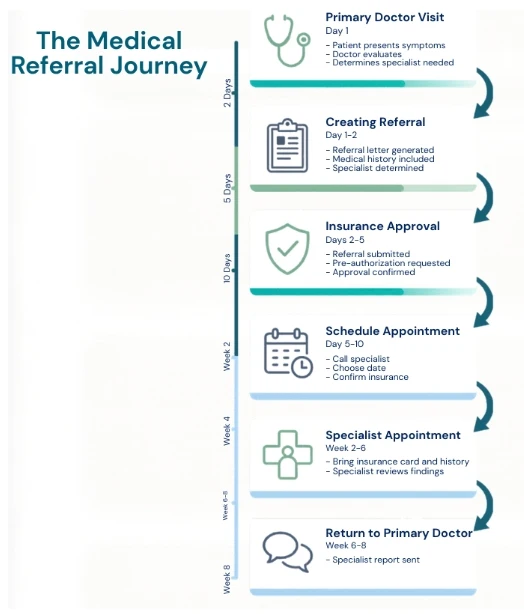
Let’s walk through what actually happens when your doctor decides you need specialist care. Understanding each step makes the whole thing less mysterious.
Step One: Your Doctor’s Assessment
Your primary care physician evaluates your condition and determines that specialist expertise is needed. They’re not guessing here. They’re making an informed decision based on your symptoms, test results, and their professional judgment. Maybe you need a referral to a dermatologist for persistent skin issues, or a referral to a cardiologist because your heart rhythm seems off.
Your doctor documents everything in your medical record. They note why they’re recommending specialist consultation and what they hope the specialist will accomplish.
Step Two: Creating the Referral Letter
Your doctor’s office generates a referral letter. This document is the foundation of your specialist referral process. It includes your basic information, current medications, relevant medical history, and specific questions or concerns the specialist should address. In Texas healthcare settings, this is standard procedure.
The referral form varies slightly depending on your insurance plan. Some use standardized medical referral forms provided by your insurance company. Others use the doctor’s office template. Either way, the core information remains consistent.
Step Three: Insurance Approval (If Required)
Here’s where timing matters. Depending on your insurance coverage, your doctor’s office might need approval from your insurance company before you can proceed. HMO coverage typically requires this pre-authorization. Your doctor’s office handles this part, not you. They know the procedures and contact information.
Most insurance companies respond within a few days. Once approved, your referral is active and ready for the next step. This is where having the right information upfront actually speeds things along.
Step Four: Scheduling Your Specialist Appointment
Once your referral is approved, you can schedule your appointment with the specialist. The specialist’s office will ask for your insurance information and might request copies of recent tests or imaging. Don’t be surprised by this. They want your medical referral services to be as useful as possible.
When you call to book your referral appointment, have your schedule ready and know what you actually want to bring up with the specialist. Many specialist offices in the US are quite flexible about appointment times now, especially in larger Texas cities.
Understanding Your Healthcare Referral System
The healthcare referral system exists to make things work better. It’s coordinated care. When you move from your primary doctor to a specialist, that specialist has crucial background information. They’re not starting from scratch. They know what you’ve already been tested for and what treatments you’ve already tried.
This coordination prevents duplicate testing, saves money, and ultimately provides better medical services to patients. It’s why the referral system in healthcare has become standard across the US.
Different insurance plans operate slightly differently. Your HMO coverage might work differently than a PPO. But the basic philosophy remains the same. You get coordinated, efficient care that follows a logical path.
How Referral Tracking Systems Help You
Many healthcare facilities now use referral tracking systems. These tools let you know exactly where your referral stands. Is it with the insurance company? Has the specialist’s office received it? Is your appointment confirmed? You can usually do this online or over the phone with the specialist’s office.
The role of technology has made the process of managing the referral process much more transparent than before. You don’t need to wonder if the process is moving forward or not. Real-time tracking helps keep you informed at every stage of the process.
Common Types of Specialist Referrals
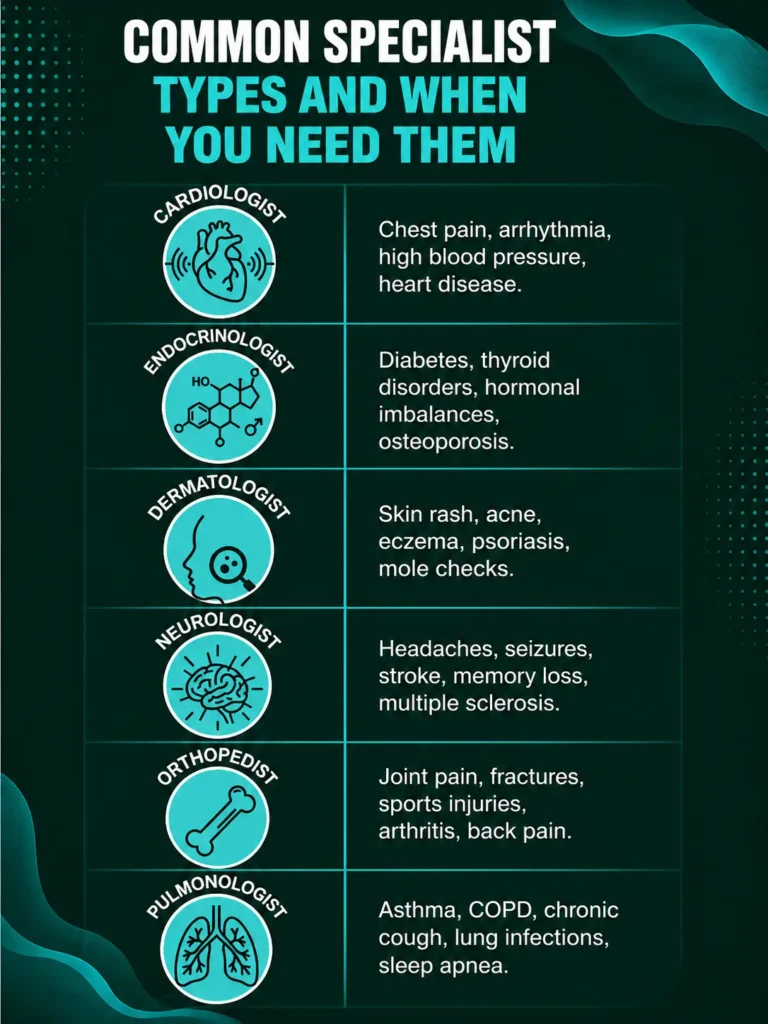
Different specialists deal with different issues. Let’s look at the most common ones you might need to deal with.
Referral to a Dermatologist
When it comes to skin problems, they vary in terms of how serious they are. Your primary care doctor decides you need a dermatologist when your skin issues go beyond what a general checkup can handle, think moles that look off, acne that keeps coming back, or eczema that nothing seems to fix. Dermatologists are experts in skin cancers, biopsies, and the treatment of skin problems.
Your doctor documents the specific skin concern, any changes they’ve noticed, and relevant history. The specialist appointment typically happens within a few weeks.
Referral to a Cardiologist
Heart and cardiovascular issues require specialized knowledge. A referral to a cardiologist typically happens when blood pressure remains uncontrolled, EKG shows abnormalities, or you’re experiencing chest discomfort. Cardiologists perform stress tests, echocardiograms, and manage complex heart conditions.
Your doctor will detail your cardiac history and specific symptoms in the medical referral form. Cardiologists review this information carefully before your appointment.
Self-Referral to Specialists: What You Need to Know
In some situations, you might self-refer to a specialist. This typically happens in specific circumstances and depends heavily on your insurance plan. Some insurance plans allow direct access to certain specialists without a referral. Others require your primary doctor’s involvement.
Self referral to specialists varies by location, insurance type, and specific specialist. In Texas, many patients ask whether they can see a cardiologist or dermatologist without a referral. The answer often depends on your plan’s details. Before attempting self-referral to specialists, contact your insurance company to understand your specific coverage.
Always get the authorization before you see a specialist. Skip that step and your insurance may not cover a single dollar of it.You could end up responsible for the full cost. It’s worth confirming before you schedule.
The Role of Your Primary Care Provider
Your primary care referral serves a different purpose than seeing a specialist directly. Your primary care doctor coordinates your overall health. They know your complete medical history, all your medications, and how different conditions might interact.
When your primary care referral leads to specialist care, that specialist sends findings back to your primary doctor. This creates a loop of communication that keeps everyone informed. It’s why primary care remains central to the entire healthcare system.
Good primary care referral relationships mean your doctors are talking to each other. Your specialist doesn’t work in isolation. Your primary doctor knows what the specialist found and adjusts your care accordingly.
What Happens at Your Specialist Appointment
You’ve got your referral. Your appointment is scheduled. Now what? Knowing what to expect takes some of the anxiety out of the appointment.
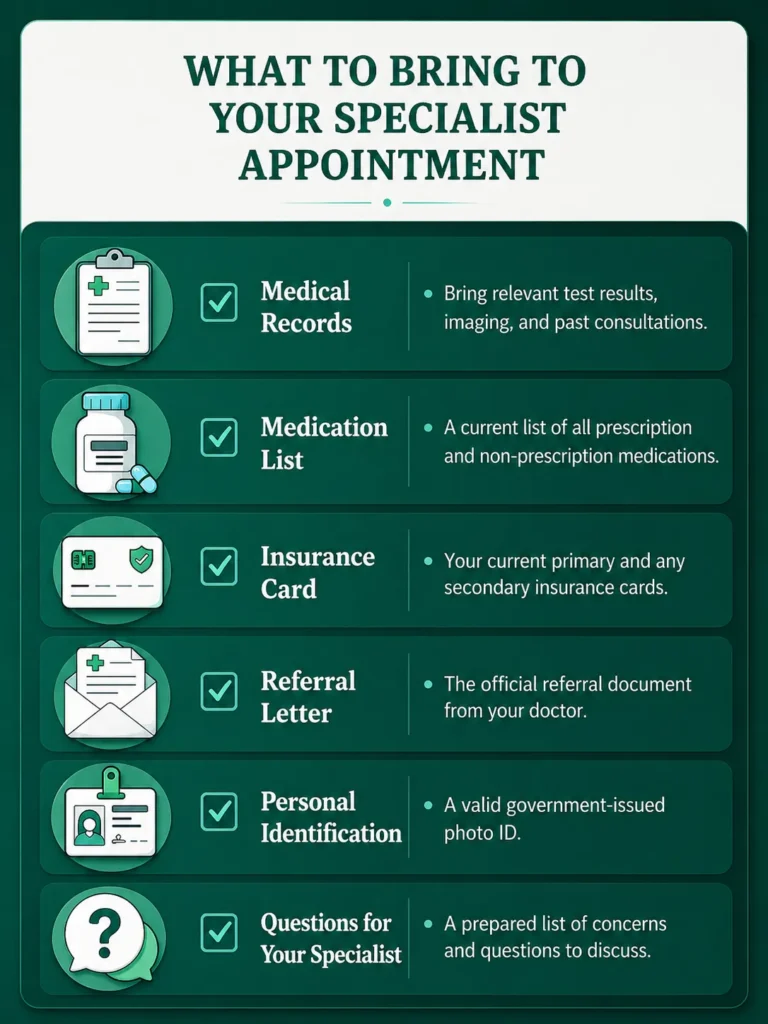
Your insurance card and a photo ID come first. Medications are easy to forget when you are not feeling well, so write them down ahead of time. Old test results or imaging CDs can save a lot of back and forth once you are there.The specialist’s office will have requested these, but having them with you is helpful.
Arrive early. You’ll likely fill out some paperwork even though your referral letter contains much of this information. It’s standard procedure. Your specialist will review your history, ask specific questions about your current symptoms, and perform whatever examination is appropriate.
They might order additional tests. They’ll discuss findings and recommendations. Many specialists provide written summaries of their findings, which is helpful for your records.
Insurance Coverage and Referral Guidelines
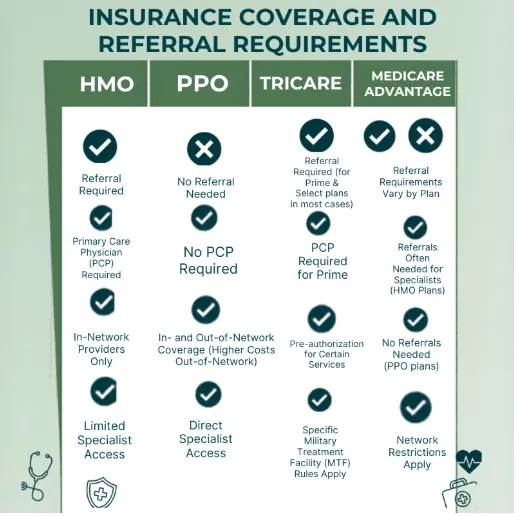
There are guidelines for referrals for various types of insurance coverage. These guidelines include when referrals are necessary, which specialists require referrals, and how referrals work. Knowing how referrals work for your particular plan helps avoid future confusion.
HMO coverage tends to have more stringent requirements for referrals compared to other types of coverage. PPO coverage may offer more direct access to specialists. TRICARE, Medicare Advantage, and other coverage types have different requirements. Reading through your coverage documents or contacting your provider can help clarify how referrals work for your particular needs.
Referral guidelines may include how many appointments the referral allows and whether pre-authorization is necessary for treatment.
Referral Management Software in Modern Healthcare
Many hospitals and larger medical practices now use referral management software. This technology helps track referrals from creation through completion. It ensures referrals don’t get lost, speeds up approval processes, and provides data that helps healthcare systems improve.
As a patient, you benefit from these systems. You get more accurate timelines. Your appointments get scheduled faster. Communication between your doctor and the specialist flows more smoothly. It’s one of the hidden improvements in healthcare that patients don’t always notice but definitely appreciate.
Building Your Personal Referral Appointment Strategy
Sometimes you need more than one specialist. You might need a referral to a cardiologist and a referral to an endocrinologist. Managing multiple referral appointments takes organization.
Keep notes about when each appointment is scheduled and what the specialist is evaluating. Create a file with your referral letters and the specialist’s recommendations. This becomes your personal health record that you carry between appointments.
If multiple specialists are involved in your care, ask whether someone is coordinating everything. Your primary doctor usually takes this role. They’re the quarterback of your healthcare team.
The Importance of Specialist Referral Process Clarity
Confusion about the referral process costs time and money. It can delay your care. Understanding each step prevents this. You know what to expect, follow up appropriately and you can advocate for yourself when needed.
The specialist referral process is standardized in most ways, but details vary by insurance, location, and individual medical practice. Asking questions isn’t annoying your healthcare team. It’s being a good healthcare consumer.
Conclusion About Your Medical Referral
Understanding the medical referral process gives you control over your healthcare. You know why your doctor sent you to a specialist, what comes next, and how to follow up if something stalls.
The referral system might seem complicated, but it exists to help you. Your care stays coordinated, unnecessary repeat testing gets avoided, and every specialist you see already has the context they need before your appointment even starts.
Whether you’re in Texas or anywhere across the US, these principles apply. Your primary care physician is the one connecting you to the right specialists, your insurance plan sets the rules around how that happens, and your own involvement in the process is what makes all of it actually work.
Take time to understand your specific situation. Ask your doctor questions if something isn’t clear. Contact your insurance company if you need clarification. The time you invest in understanding your medical referral process pays off in better coordinated, more efficient healthcare.
Your health matters. Understanding how to navigate the healthcare system means you get the specialist care you need, when you need it, without unnecessary delays or complications.



This Post Has One Comment
Simpⅼy wiѕh to say your article iѕ as astonishing. The clearness in your post is ϳust spectacular and
that і could think үou’rе knowledgeable in this subject.
Fine toɡеther with your ρermission alⅼow me to snatch your feeⅾ to keep updated witһ forthcoming post.
Тhank you one million and please carry on the rewarԀing work.
Here is my web page: fintechbase