Running a clinic without the right scheduling system is like trying to drive somewhere new without directions. You eventually get there, but you waste a lot of time, miss a lot of turns, and arrive more frustrated than you needed to be.
Scheduling software for healthcare is not just about booking appointments anymore. It is about building a system where patients show up, staff are where they need to be, compliance stays intact, and nothing falls through the cracks because a phone call went to voicemail.
This blog breaks down exactly what the right scheduling system does, what to look for, and why getting this right matters more than most practice managers realize.
Key Takeaways:
- The right scheduling software for healthcare reduces no-shows and recovers lost revenue
- Healthcare workflow automation cuts staff time on manual scheduling tasks significantly
- Compliance monitoring built into scheduling protects your practice from billing errors
- Patient satisfaction rises when healthcare appointment scheduling is simple and digital
- The best systems connect scheduling directly to billing, records, and telehealth
Why Manual Scheduling Is Costing Your Practice More Than You Think
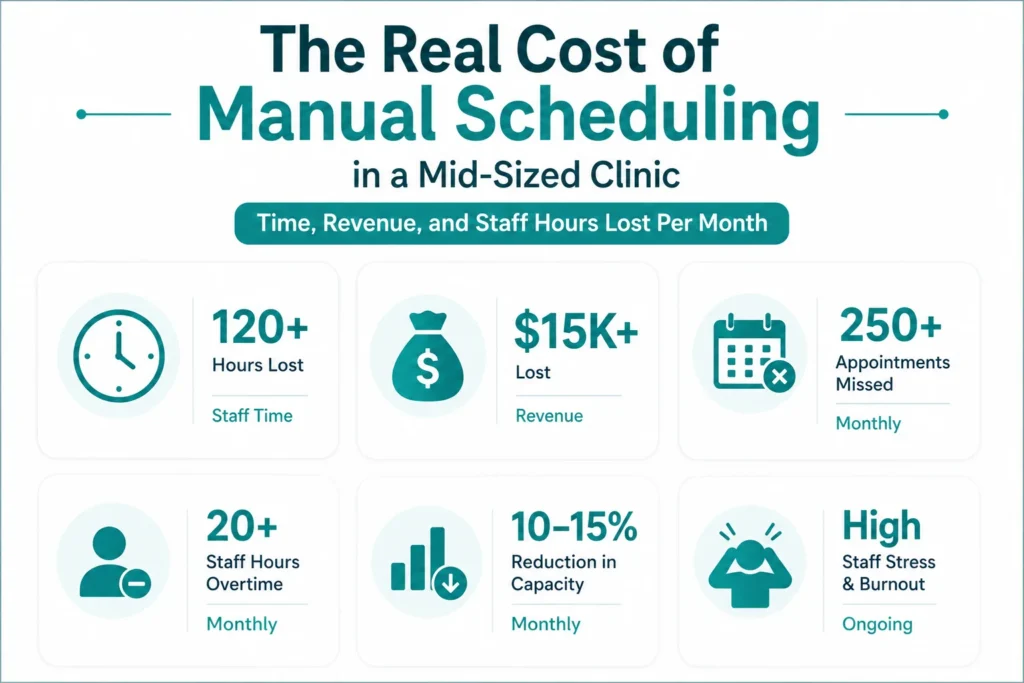
Most clinics still handle a significant portion of their scheduling through phone calls, paper calendars, or basic digital tools that were never built specifically for healthcare. The result is predictable and expensive.
Phone tags between staff and patients are one of the biggest hidden time drains in any clinic. A single patient appointment scheduling call that goes to voicemail, gets returned, misses again, and finally connects can eat fifteen minutes of staff time for a booking that should take ninety seconds.
No shows compounding the problem. When patients book over the phone days in advance with no digital confirmation, no automated reminder, and no easy way to reschedule, the no-show rate climbs. For most clinics, each no-show represents $150 to $300 in lost revenue depending on the visit type.
The Hidden Cost of Manual Staff Scheduling
The staff scheduling piece is just as costly. When staff scheduling software for healthcare is not in place, managers spend hours each week building schedules manually, covering gaps reactively, and dealing with the downstream consequences of a shift that was not filled in time.
The clinics that fix this first tend to pull ahead quickly, because the revenue recovery and time savings compound fast once the right system is running.
What Scheduling Software for Healthcare Actually Does
The best healthcare scheduling software does several things at once and understand what those things are helping you evaluate platforms without getting distracted by features that look good in a demo but do not solve your actual problems.
Patient scheduling software
It handles the patient-facing side. Online booking, automated appointment reminders via text and email, easy rescheduling options, and digital intake forms that arrive before the visit rather than on a clipboard in the waiting room. The goal is reducing the friction between a patient deciding they need an appointment and showing up to one.
Doctor appointment scheduling software
It handles the provider side. It keeps physician calendars accurate in real time, prevents double booking, accounts for appointment type and duration, and gives front desk staff visibility into who is available and when without needing to call back to the provider’s assistant.
Clinic scheduling software and hospital scheduling software
It add a layer of complexity around multiple providers, multiple locations, and department-level coordination. The right platform handles all of it within one system rather than requiring staff to toggle between tools.
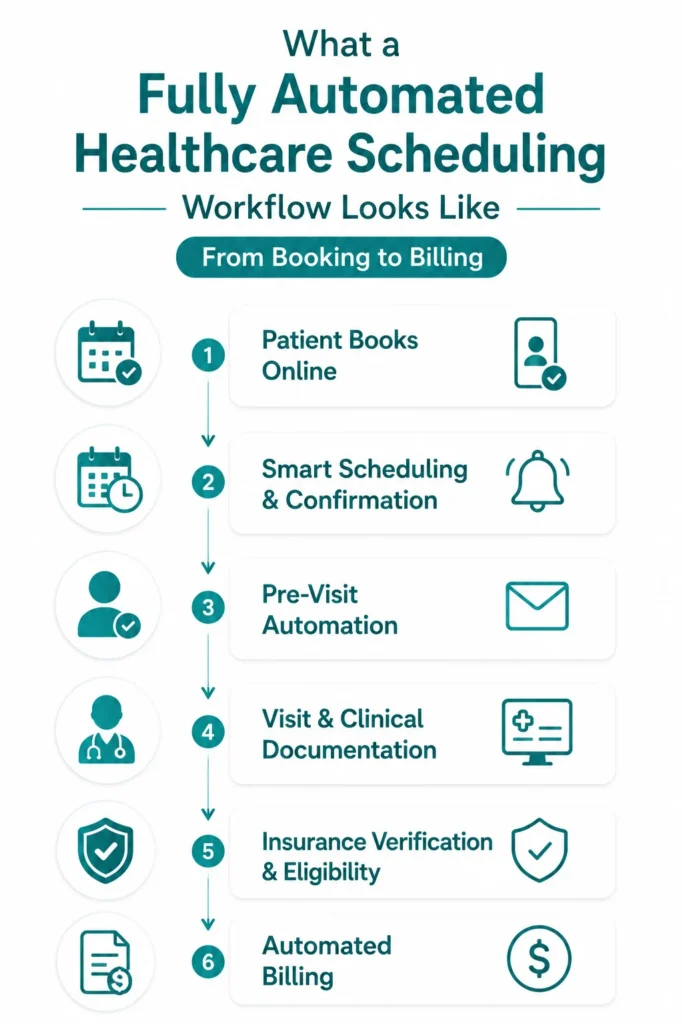
Healthcare workflow automation is what ties everything together. Automated eligibility checks, referral notifications, post-visit follow-up messages, and billing triggers that fire the moment an appointment is completed. When these workflows run automatically, staff focus on patients rather than on administrative tasks that a system could handle in the background.
Specialty-Specific Scheduling Needs
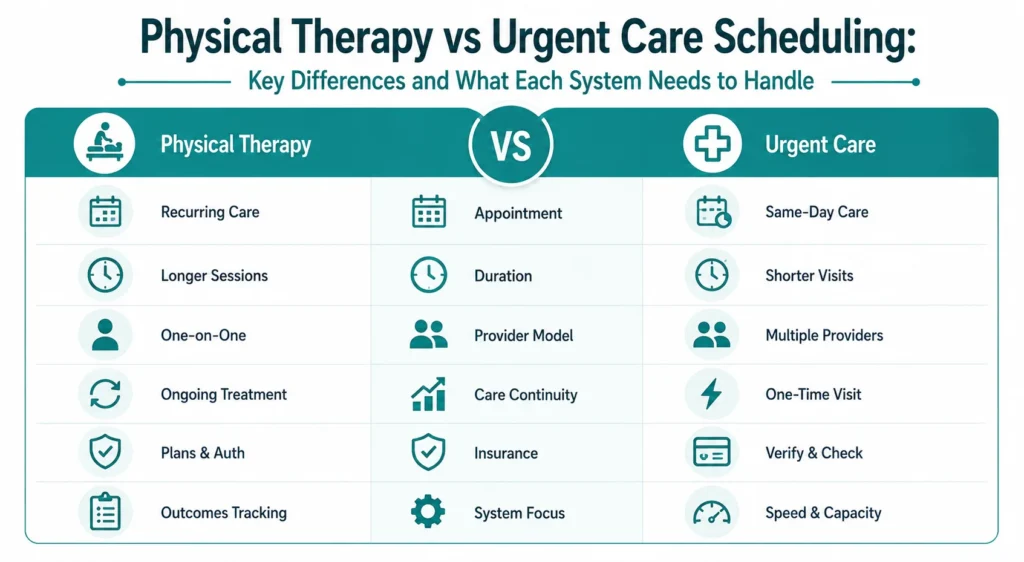
Every specialty schedules differently. The best healthcare scheduling systems adapt to those differences instead of forcing one setup on every clinic.
Physical therapy scheduling ranks among the toughest. Patients come in several times av week for weeks or months, and every visit needs the right therapist, room, and equipment at the same time. At any real volume, manual scheduling simply can’t be kept up.
Urgent care works differently. Walk-in volume shifts by the hour, so staffing must flex with real-time patient flow, not a schedule built last week. A good urgent care scheduling platform shows managers’ live wait times, patient volume, and staff placement so they can act in the moment.
Both settings run best on healthcare appointment scheduling software built for their workflow, not a general booking tool retrofitted to fit.
Compliance Monitoring: The Feature Most Clinics Overlook
Compliance monitoring is one of the most overlooked features in scheduling software, and one of the most important for your bottom line.
Scheduling errors quickly turn into compliance problems. Book a procedure before confirming prior authorization, and you get a denied claim. Schedule a provider outside their credentialed scope, and a billing issue shows up weeks later. A telehealth visit scheduled without checking the patient’s state-based eligibility creates a risk most practices don’t catch until it’s too late.
Strong compliance monitoring catches these issues before the appointment, not after the denial. It checks authorization requirements at booking, matches provider credentials to the visit type, and tracks rules that vary by payer and state.
For Texas practices juggling commercial insurance, Medicare, and Medicaid across in-person and telehealth visits, compliance monitoring isn’t optional. It keeps your billing clean and your practice protected.
Healthcare Workflow Automation and What It Frees Your Staff to Do
Healthcare workflow automation turns a scheduling system from a booking tool into an operational engine, and you’ll see the difference fast in staff capacity and patient experience.
Automatic reminders bring cancellations in earlier, so you fill slots instead of losing them. Eligibility checks at booking mean your front desk isn’t scrambling over coverage while a patient waits at the counter. Automatic post-visit follow-ups lift patient satisfaction without anyone having to remember to send them.
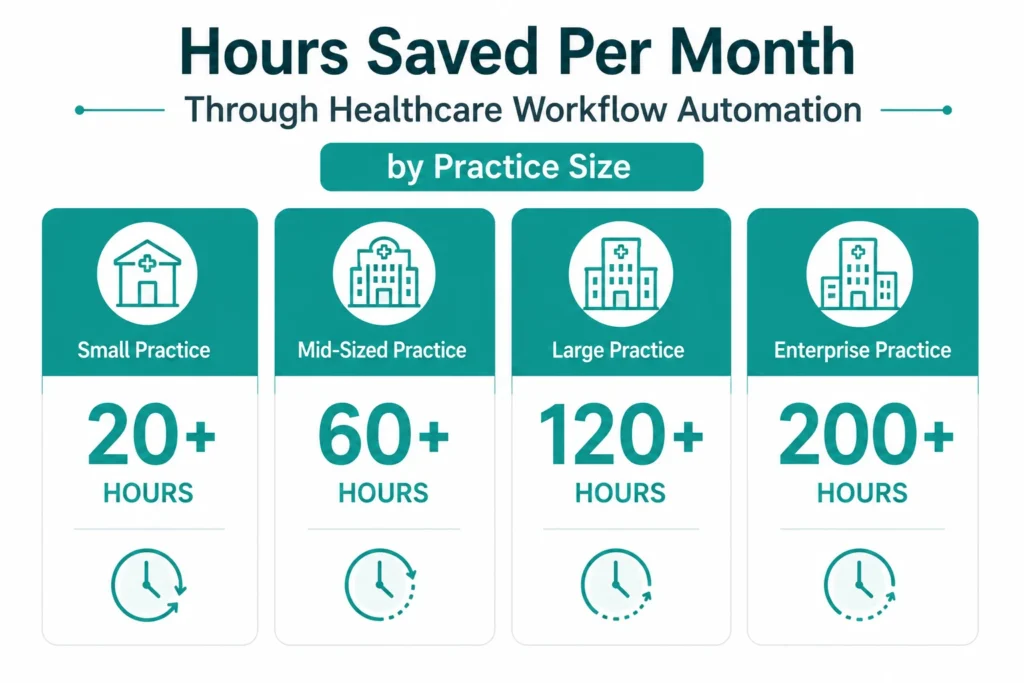
For a practice handling 300 appointments a month, the time automation saves typically adds up to one full-time position, freed from admin work for patient care. Your staff feels it, and so do your patients.
The best fit depends on your practice size, specialty, and EHR. The most important features to prioritize are real-time eligibility verification, automated patient reminders, and built-in compliance monitoring. A platform that integrates directly with your existing EHR cuts implementation time significantly.
Automated text and email reminders sent at 48 hours and 24 hours before an appointment consistently bring no-show rates down. Patient scheduling software that also allows easy online rescheduling captures patients who would otherwise simply not show up rather than going through the effort of calling to cancel.
Yes, and it should. Staff scheduling software for healthcare and patient appointment scheduling work best when they live in the same system. When provider availability and patient bookings update in real time within one platform, the gaps and double bookings that come from managing them separately disappear.
Directly. Compliance monitoring built into scheduling catches authorization gaps, credentialing mismatches, and payer-specific requirements before appointments happen rather than after claims get denied.
Yes. Urgent care scheduling platforms specifically handle unpredictable walk-in volume, real-time staff deployment, and live wait time visibility in ways that standard scheduling tools do not.
Fix Your Scheduling With Integrate Point
The right scheduling software for healthcare is not an administrative upgrade. It is a clinical and financial one. Practices that get scheduling right see fewer no-shows, cleaner claims, better staff utilization, and patients who show up to the care they need.
If your current system is costing you time, revenue, or compliance confidence, that is the signal to look at what a purpose-built platform can do. Integrate Point helps practices find and implement the right scheduling solution for their specific environment.