If you’re a doctor, clinic manager, or hospital administrator in the US, referral leakage is silently draining your revenue and damaging patient outcomes.
68% of specialist referrals never get completed when clinics rely on phone calls, faxes, or paper-based workflows (Healthcare IT News, 2024).
For a mid-sized Texas clinic making 200 referrals per month, this translates into:
- 136 missed specialist visits
- $40,000+ in lost downstream revenue
- Delayed care and patient dissatisfaction
Meanwhile, patients face their own frustrations:
- Waiting 3-7 days just to get an appointment scheduled
- Making multiple phone calls between offices
- Losing paper referral slips
- Missing critical follow-up care
Real-time online booking for specialist referrals eliminates pain points for both providers and patients.
This blog explains how it works and why it’s transforming healthcare delivery.
- What Is Real-Time Online Booking for Specialist Referrals in US Healthcare
- Why Traditional Referral Processes Fail: The Data Doesn't Lie
- Real-Time Referral Booking: Step-by-Step Workflow
- Quantifiable Benefits: What Healthcare Organizations Gain
- Critical Success Factor: Telehealth Referral Integration with Real-Time Online Booking
- Implementation Roadmap: Overcoming Common Obstacles
- Best Practices for Maximum Referral Management Success
- Real-World US Success Stories
- The Strategic Imperative: Why Waiting Is No Longer an Option
- Your Action Plan: Getting Started with Real-Time Referral Booking
- Key Metrics to Track for Referral Management Success
- Today Stop Losing Specialist Referrals: Fix Referral Leakage in Your Clinic Today
What Is Real-Time Online Booking for Specialist Referrals in US Healthcare
Real-time online booking for specialist referrals allows US healthcare providers to:
- Schedule specialist appointments instantly before the patient leaves the clinic or virtual visit.
- Ensures insurance eligibility verification and referral authorization are completed upfront.
- Send medical records automatically
Key Differences from the Traditional Methods
Instead of handing patients a phone number and hoping they follow through, providers secure confirmed appointments before patients leave the office.
This technology integrates:
- Electronic Health Records (EHR systems)
- Healthcare appointment scheduling software
- Insurance eligibility verification tools
- Digital referral management platforms
Learn how Integrate Point’s medical referral management services help US clinics reduce referral leakage and improve patient access.
Why Traditional Referral Processes Fail: The Data Doesn’t Lie
For Healthcare Providers:
Referral Leakage Costs:
- Average loss per incomplete referral: $200-$400 (includes lost downstream revenue)
- Clinics lose $54,000-$108,000 annually from 200 monthly referrals with 68% leakage
- Denied claims due to improper referral documentation: 15-20% of submissions
Operational Inefficiencies:
- Staff spends 15-20 minutes per referral on phone calls and faxing
- 35% of referral calls go to voicemail requiring callbacks
- Manual tracking requires 2-3 FTE hours daily for medium practices
For Patients:
Access Barriers:
- 54% of patients report difficulty scheduling specialist appointments (American Medical Association, 2023)
- Average wait time from referral to appointment: 24-28 days
- 41% abandon referrals due to scheduling complexity
Common Failure Points:
- Paper referral slips get lost
- Faxes don’t transmit properly
- Patients forget to call within business hours
- Specialist offices don’t answer phones
- Insurance eligibility isn’t verified upfront
- No follow-up mechanism to track completion
- Medical records arrive late or incomplete
Real-Time Referral Booking: Step-by-Step Workflow
Referral Initiation (30 seconds) – Step 1:
- Physician identifies need during consultation
- Enters referral into integrated EHR/referral platform
- System auto-populates patient demographics and clinical notes
Instant Insurance Verification (5 seconds) – Step 2:
- Platform checks patient eligibility in real-time
- Identifies authorization requirements
- Confirms specialist is in-network
Read our complete guide to insurance eligibility verification
Intelligent Provider Matching (10 seconds) – Step 3:
System filters specialists by:
- Insurance network compatibility
- Geographic proximity to patient
- Specialty and subspecialty match
- Provider ratings and availability
- Historical acceptance rates
Real-Time Appointment Booking (60 seconds) – Step 4:
- Staff/provider views live calendar availability
- Books appointment during patient visit
- No phone calls or waiting required
- Confirmation generated instantly
Automated Patient Notification – Step 5:
Patient receives via text/email:
- Appointment date, time, and location
- Specialist contact information
- Directions and parking details
- Pre-visit instructions
- Digital check-in options
Secure Medical Record Transfer – Step 6:
- Clinical notes sent automatically
- Relevant diagnostic results attached
- Referral authorization included
- HIPAA-compliant transmission
Continuous Tracking & Alerts – Step 7:
System monitors:
- Appointment confirmation status
- Patient check-in completion
- Post-visit documentation
- Need for follow-up referrals
Performance Analytics – Step 8:
Dashboard tracks:
- Referral completion rates
- Time-to-appointment metrics
- Network utilization patterns
- Revenue cycle impact
Quantifiable Benefits: What Healthcare Organizations Gain
1. Slash Referral Leakage by 85%
Before real-time booking:
- Referral completion rate: 32%
After implementation:
- Referral completion rate: 92%
- Case study: Regional health system increased completions from 38% to 94% within 6 months (Source: Healthcare Innovation Journal, 2024)
ROI calculation:
- 200 monthly referrals × 68% leakage = 136 lost referrals
- 136 × $300 average value = $40,800 monthly loss
- Real-time booking reduces leakage to 8% = $36,000 monthly recovered
- Annual gain: $432,000
2. Reduce Administrative Burden by 70%
Time savings per referral:
- Traditional method: 18 minutes (calls, faxing, follow-up)
- Real-time booking: 5 minutes (automated workflow)
- Savings: 13 minutes per referral
For 200 monthly referrals:
- 2,600 minutes saved = 43 staff hours monthly
- Equivalent to 1.25 FTE positions redirected to patient care
3. Accelerate Time-to-Care by 75%
Average days from referral to specialist appointment:
- Traditional: 24-28 days
- Real-time booking: 6-8 days
- Improvement: 18-20 days faster
Clinical impact:
- Earlier diagnosis and treatment initiation
- Reduced disease progression
- Better patient outcomes
- Lower emergency department utilization
4. Boost Revenue Cycle Performance
Claims denial reduction:
- Referrals without proper authorization: 18% denial rate
- Real-time verified referrals: 2% denial rate
- Improvement: 89% fewer denials
Faster reimbursement:
- Complete referrals processed 21 days faster
- Improved cash flow and days in A/R
- Reduced write-offs and bad debt
5. Strengthen Provider Network Relationships
Benefits for referring providers:
- Visibility into specialist availability
- Confirmation of appointment completion
- Feedback loop on patient outcomes
- Enhanced care coordination
Benefits for specialists:
- Higher show rates (94% vs 68%)
- Complete medical records arrive before visit
- Verified insurance reduces payment issues
- Automated patient prep improves efficiency
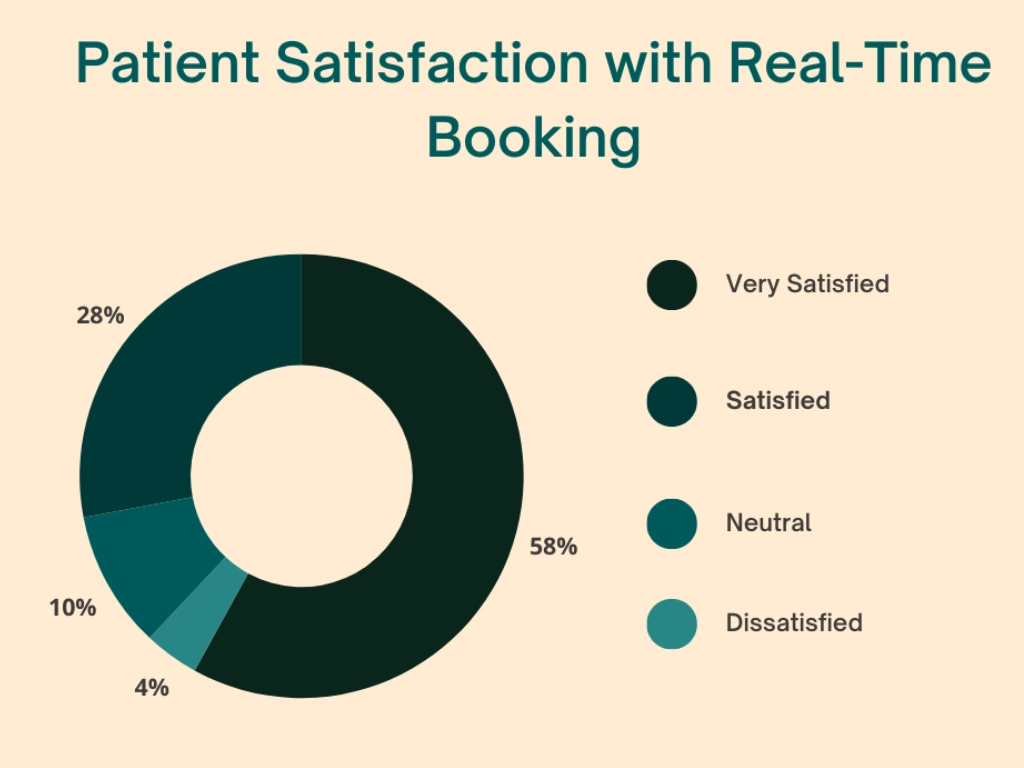
6. Transform Patient Experience
Patient satisfaction improvements:
- Ease of scheduling: +47 percentage points
- Overall care coordination: +39 percentage points
- Likelihood to recommend: +42 percentage points
(Source: Press Ganey Healthcare Consumerism Report, 2024)
Patient feedback highlights:
- “Left the office with appointment already scheduled”
- “Received text reminders automatically”
- “Didn’t have to make any phone calls”
- “Got appointment in less than a week”
Critical Success Factor: Telehealth Referral Integration with Real-Time Online Booking
The Telehealth Referral Challenge
With 38% of primary care visits now conducted via telehealth (American Telemedicine Association, 2024), real-time booking becomes even more critical.
Why it Matters
- Virtual patients can’t receive paper referral slips
- Phone-based scheduling creates disconnected experience
- Referral leakage rates for telehealth visits: 76% (vs 68% in-person)
Real-time Online Booking Advantages for Telehealth
- Instant scheduling during virtual visits
- Digital referral delivery to patient portal
- Integration with both in-person and virtual specialists
- Continuity across care modalities
- Remote patient support for scheduling
Hybrid Care Coordination
Platform enables referrals to:
- In-person diagnostic centers for imaging/labs
- Specialists offering virtual consultations
- Behavioral health providers (licensed by region)
- Physical therapy and rehabilitation services
Result: Seamless patient journey regardless of visit modality
Implementation Roadmap: Overcoming Common Obstacles
Challenge 1: EHR Integration Complexity
Solution:
- Choose platforms with pre-built integrations for major EHRs (Epic, Cerner, Athenahealth)
- Use FHIR-compliant APIs for seamless data exchange
- Partner with vendors offering implementation support
Timeline: 6-12 weeks for full integration
Challenge 2: Staff Adoption Resistance
Solution:
- Conduct hands-on training sessions (4-6 hours)
- Assign “referral champions” in each department
- Demonstrate time savings with pilot program
- Celebrate early wins and efficiency gains
Success metric: 95% staff proficiency within 30 days
Solution:
Challenge 3: Specialist Network Participation
- Share data on reduced no-shows (26% improvement average)
- Demonstrate complete documentation benefits
- Offer technical support for calendar integration
- Start with high-volume specialists first
Adoption curve: 60% network participation in 3 months, 90% in 6 months
Challenge 4: Insurance Complexity
Solution:
- Implement platforms with built-in payer requirement databases
- Automate prior authorization workflows
- Regular updates for policy changes
- Real-time eligibility checks prevent surprises
Challenge 5: Data Security & Compliance
Requirements: US Compliance Standards Supported
- HIPAA-compliant encryption and referral workflows
- SOC 2 Type II Security Standards
- 21st Century Cures Act interoperability readiness
- CMS and commercial payer referral documentation compliance
- Business Associate Agreements (BAAs) with all vendors
- Regular security audits and penetration testing
- Staff training on Protected Health Information (PHI) handling
Best Practices for Maximum Referral Management Success
Before Implementation
- Baseline Your Current Performance
- Track referral completion rates for 30 days
- Calculate staff time spent per referral
- Measure average days from referral to appointment
- Document denial rates for referral-related claims
- Audit Your Specialist Network
- Confirm current contact information
- Identify high-volume referral destinations
- Assess insurance network coverage gaps
- Evaluate specialist appointment availability
- Map Your Ideal Workflow
- Identify who initiates referrals (physicians, nurses, MAs)
- Define authorization approval processes
- Establish patient notification protocols
- Create escalation procedures for urgent referrals
During Implementation
- Start with a Pilot Program
- Select one department or provider group
- Focus on 2-3 high-volume specialists
- Run parallel workflows for 2-4 weeks
- Gather feedback and refine processes
- Train Thoroughly and Repeatedly
- Initial training: 4-hour hands-on session
- Job aids and quick reference guides
- Weekly office hours for questions
- Refresher training at 30 and 90 days
- Communicate with Patients
- Explain new process during check-in
- Provide written instructions for portal access
- Highlight benefits (faster appointments, less hassle)
- Collect feedback via surveys
After Go-Live
- Monitor Performance Metrics Weekly
- Referral volume and completion rates
- Average time-to-appointment
- Staff utilization of system
- Patient satisfaction scores
- Conduct Monthly System Audits
- Review referral data accuracy
- Check for documentation completeness
- Analyze denial trends
- Update specialist directory information
- Optimize Continuously
- Identify bottlenecks in workflow
- Expand specialist network participation
- Add new specialties to platform
- Refine patient communication templates
- Maintain Specialist Relationships
- Share quarterly performance reports
- Recognize top-performing partners
- Solicit feedback on referral quality
- Collaborate on care coordination improvements
Real-World US Success Stories
Case Study 1: Multi-Specialty Group Practice
Profile: 45 providers, 12 locations, 850 monthly referrals
Before real-time booking:
- Referral completion: 34%
- Staff time: 95 hours/month on referral coordination
- Patient complaints: 23 per month regarding scheduling
After 6 months:
- Referral completion: 91%
- Staff time: 22 hours/month (77% reduction)
- Patient complaints: 3 per month (87% reduction)
- Revenue impact: $127,000 monthly increase
Case Study 2: Federally Qualified Health Center (FQHC)
Profile: Underserved population, high Medicaid volume, complex authorization requirements
Before real-time booking:
- Authorization denials: 22%
- Average time to specialist: 34 days
- Referral abandonment: 71%
After implementation:
- Authorization denials: 4%
- Average time to specialist: 9 days
- Referral abandonment: 14%
- Patient outcomes: 38% reduction in ER visits for preventable conditions
Case Study 3: Telehealth-First Primary Care
Profile: 100% virtual visits, nationwide patient base
Challenge: No physical touchpoint for referral handoffs
Solution: Real-time booking with digital-first approach
Results:
- Referral completion increased from 24% to 89%
- Patient satisfaction: 4.8/5 stars (up from 3.2)
- Expanded specialist network to 350+ providers across 45 states
- Business impact: Enabled value-based care contracts requiring 85%+ referral completion
The Strategic Imperative: Why Waiting Is No Longer an Option
Industry Trends Demanding Change
1. Value-Based Care Contracts
- CMS and commercial payers require referral completion tracking
- Quality metrics tied to care coordination performance
- Financial penalties for poor referral management
- Upside risk sharing requires proven outcomes
2. Healthcare Consumerism
- Patients expect Amazon-like booking experiences
- 87% of patients prefer digital scheduling options (Accenture, 2024)
- Poor referral experience drives patient attrition
- Online reviews increasingly mention care coordination
3. Staff Shortages
- Healthcare workforce crisis demands automation
- Cannot hire enough staff for manual processes
- Burnout from administrative burden
- Technology must fill efficiency gaps
4. Regulatory Complexity
- Prior authorization requirements increasing
- Documentation standards becoming stricter
- Interoperability mandates (21st Century Cures Act)
- Audit risk from incomplete referrals
5. Competitive Differentiation
- Health systems with superior access capture market share
- Referral networks drive downstream revenue
- Digital capabilities attract tech-savvy patients
- Care coordination excellence = brand advantage
The Cost of Inaction
Continuing with traditional referral methods means:
- Losing 68% of referrals = hundreds of thousands in annual revenue
- Wasting 40+ staff hours monthly on manual coordination
- Risking 15-20% claim denials from authorization issues
- Delivering subpar patient experience in competitive market
- Missing value-based care quality benchmarks
- Falling behind competitors who’ve modernized
According to Becker’s Hospital Review (2024), healthcare organizations report an average 18-month lag between competitors who implement digital referral systems—a gap that translates to significant market share and revenue loss.
Your Action Plan: Getting Started with Real-Time Referral Booking
Assessment & Planning – Week (1-2):
- Calculate current referral leakage rate and revenue impact
- Inventory specialist network and referral volume by specialty
- Document existing workflow and pain points
- Identify key stakeholders (physicians, staff, IT, revenue cycle)
- Research platforms with EHR integration capabilities
Vendor Selection – Week (3-4):
- Request demos from 3-5 referral management platforms
- Evaluate features: eligibility checking, scheduling, tracking, analytics
- Verify EHR compatibility and integration complexity
- Check references from similar-sized organizations
- Review pricing models and calculate ROI timeline
Pilot Design – Month (2):
- Select pilot department/providers
- Recruit 3-5 specialists for initial participation
- Develop training materials and support resources
- Create patient communication templates
- Establish success metrics and tracking methods
Implementation – Month (3-4):
- Complete EHR integration and testing
- Train pilot staff and providers (4-6 hours)
- Launch with close monitoring and daily check-ins
- Gather feedback and iterate on workflows
- Track pilot metrics weekly
Expansion – Month 5-6:
- Share pilot results with leadership
- Roll out to additional departments in phases
- Expand specialist network participation
- Refine processes based on early learnings
- Scale patient communication and education
Ongoing: Optimization
- Monitor KPIs monthly (completion rate, time-to-appointment, revenue)
- Conduct quarterly specialist satisfaction surveys
- Update training for new staff during onboarding
- Expand to new specialties and use cases
- Benchmark against industry standards
Key Metrics to Track for Referral Management Success
Operational Metrics
- Referral completion rate (target: >90%)
- Average time from referral to appointment (target: <10 days)
- Staff time per referral (target: <5 minutes)
- System utilization rate (target: >85% of eligible referrals)
Financial Metrics:
- Revenue from completed referrals (month-over-month growth)
- Referral-related claim denial rate (target: <3%)
- Cost per referral processed (should decrease 60-70%)
- ROI and payback period (typically 6-9 months)
Quality Metrics:
- Patient satisfaction with referral process (target: >4.5/5)
- Specialist satisfaction with referral quality (target: >4.0/5)
- Documentation completeness (target: >95%)
- Authorization approval rate (target: >95%)
Network Metrics:
- Specialist participation rate (target: >80% of network)
- Appointment availability within 2 weeks (target: >70%)
- In-network referral rate (target: >92%)
- Specialist response time to referrals (target: <24 hours)
Learn more about healthcare revenue cycle optimization strategies
Today Stop Losing Specialist Referrals: Fix Referral Leakage in Your Clinic Today
The evidence is overwhelming: traditional referral methods are failing healthcare providers and patients alike.
You’re losing 68% of referrals—and thousands of dollars monthly—due to outdated, manual processes. Your staff is drowning in phone calls and faxes. Patients are frustrated and abandoning care. Your competitors are pulling ahead with digital solutions.
The question isn’t whether to implement real-time referral booking. It’s how fast you can get started.
Here’s What to Do Right Now
1. Schedule Your Free Referral Leakage Assessment: Let Integrate Point analyze your current referral performance and calculate your exact revenue loss. We’ll show you what you’re leaving on the table—and how much you can recover.
2. Book a Live Demo of Real-Time Referral Booking: Request a personalized demo showing how Integrate Point’s platform integrates with your EHR, verifies insurance eligibility instantly, and book specialist appointments in under 60 seconds.
3. Receive a Custom Revenue Recovery Report for Your Practice: We’ll create a tailored plan for your organization—including timeline, training approach, specialist network strategy, and month-by-month ROI projections.
Why Integrate Point?
- Pre-built integrations with major EHRs
- Real-time insurance verification with 50+ payers
- Proven results: Average 85% reduction in referral leakage
- Full-service implementation support (training, onboarding, optimization)
- Analytics dashboard tracking every metric that matters
- HIPAA-compliant and SOC 2 Type II certified
- Dedicated success team throughout your journey
Don’t Let Another Month Go By
For every 100 referrals you make:
- 68 patients aren’t completing them
- You’re losing $20,000-$27,000 in downstream revenue
- Your staff is wasting 30+ hours on failed follow-ups
- Your patient satisfaction scores are suffering
That’s $240,000-$324,000 lost annually for a typical clinic making 100 referrals monthly.