Every day, clinics across Wylie and the DFW metroplex lose patients, revenue, and reputation due to inefficient referral systems. If you’re still relying on faxed referrals, you’re likely experiencing:
- 30-40% referral leakage (patients who never complete specialist appointments)
- 2-3 hours daily staff time spent on referral follow-ups
- Patient complaints about unclear referral status and long wait times
- Revenue loss from incomplete care coordination
The question isn’t whether to modernize—it’s how quickly you can implement electronic referral systems to stop the bleeding.
- The Real Cost of Fax-Based Referrals for Texas Clinics (Stats & ROI)
- Why Electronic Referral Systems Win: Evidence-Based Benefits
- Special Considerations for DFW Healthcare Providers
- Real-World Implementation: What to Expect
- Common Concerns Addressed
- Future-Proof Your Practice: Emerging Technologies in Referral Management
- The Competitive Advantage: What Leading Practices Are Doing
- Your Action Plan: Stop Losing Patients Today
- Make the Switch: Your Patients Are Waiting
The Real Cost of Fax-Based Referrals for Texas Clinics (Stats & ROI)
For Healthcare Providers
Operational Inefficiencies:
- 67% of faxed referrals require manual follow-up calls (Journal of Healthcare Management, 2023)
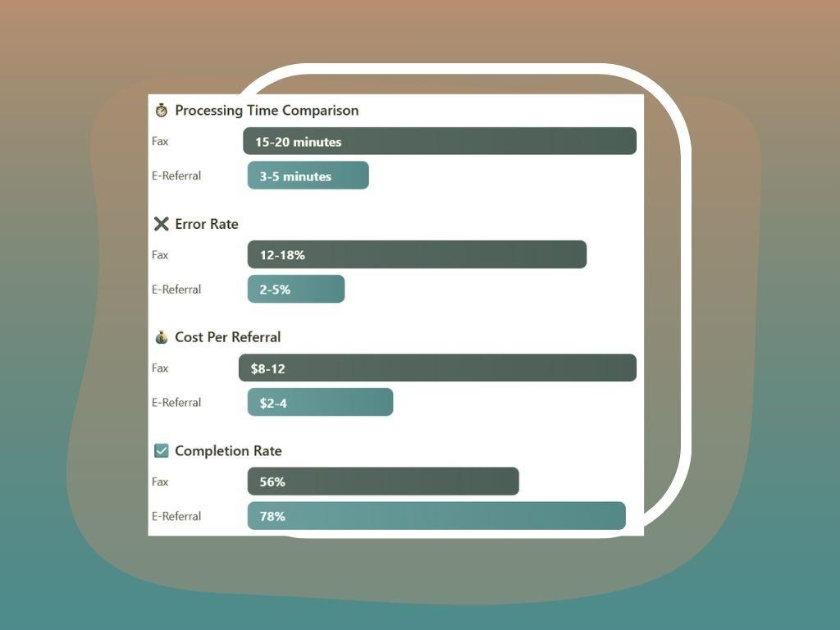
- Average processing time: 15-20 minutes per faxed referral vs. 3-5 minutes for e-referrals
- Error rate: 12-18% of faxed referrals contain incomplete or incorrect information
- Staff productivity loss: Medical assistants spend up to 35% of their time managing paper-based referrals
Financial Impact:
- Cost per faxed referral: $8-12 (including labor, supplies, phone follow-ups)
- Cost per electronic referral: $2-4
- Annual savings potential: $25,000-$75,000 for mid-sized practices (300-500 referrals/month)
For Patients
The Patient Experience Crisis:
- 42% of patients don’t know if their referral was sent or received
- Average wait time awareness: Only 28% of patients receive updates on specialist appointment availability
- Referral completion rate: 56% for fax-based systems vs. 78% for electronic systems
- Patient satisfaction drop: 34% lower satisfaction scores for practices using manual referral processes
- Evidence on referral workflow improvement: https://www.ajmc.com
Why Electronic Referral Systems Win: Evidence-Based Benefits
1. Dramatic Efficiency Gains for Clinical Staff
Time Savings:
- Automated data population reduces form completion time by 70%
- Real-time tracking eliminates 85% of follow-up calls
- Instant transmission removes fax confirmation delays
Reduced Administrative Burden:
- No more printing, scanning, or physical document management
- Automatic routing to appropriate specialists based on insurance and availability
- Built-in status notifications for staff and providers
Case Study: A 15-physician primary care practice in Plano reduced referral processing time from 45 hours to 12 hours weekly after implementing electronic referral systems—freeing up 1,716 staff hours annually for direct patient care.
2. Superior Patient Care Coordination
Clinical Benefits:
- Complete patient data integration with EHR systems
- Specialists receive comprehensive patient history, medications, and diagnostic results before consultation
- Closed-loop communication ensures referring physicians receive specialist notes and recommendations
- Reduced duplicate testing through better information sharing
Research Finding: Integrated electronic referral systems reduce redundant diagnostic testing by 23% and improve care coordination outcomes by 41% (American Journal of Managed Care, 2024).
3. Enhanced Patient Experience and Retention
Patient Engagement Features:
- Real-time referral status visible through patient portals
- Specialist selection options with provider profiles and availability
- Automated appointment reminders via text, email, or phone
- Digital communication replacing frustrating phone tag
Impact on Patient Satisfaction:
- 31% increase in patient satisfaction scores for practices using electronic referrals
- 22% reduction in patient-initiated inquiry calls about referral status
- 18% improvement in specialist appointment completion rates
What Patients Are Saying: “I knew exactly where my referral was, could see available appointments, and book online. It was so much better than waiting for a callback.” — Survey respondent, Dallas patient
4. Robust Security and HIPAA Compliance
Security Advantages Over Fax:
- 256-bit encryption for data transmission and storage
- Complete audit trails tracking every user access and action
- Role-based access controls limiting information visibility
- Automatic compliance monitoring and reporting
Fax Vulnerabilities:
- Physical documents can be misfiled, lost, or viewed by unauthorized staff
- No audit trail for document handling
- Misfaxed documents expose patient data to wrong recipients (3-5% error rate nationally)
Compliance Benefit: Electronic systems provide automated HIPAA compliance documentation, reducing audit preparation time by 60-80%.
5. Powerful Analytics for Continuous Improvement
Referral Analytics Dashboard Capabilities:
- Track referral completion rates by specialist and insurance type
- Identify bottlenecks in the referral process
- Monitor average time-to-appointment metrics
- Measure patient satisfaction throughout the referral journey
- Generate reports for quality improvement initiatives
Data-Driven Optimization: Clinics using referral analytics report 25-35% improvement in referral completion rates within six months of implementation by identifying and addressing specific workflow issues.
Special Considerations for DFW Healthcare Providers
Wylie and Dallas-Area Specific Challenges:
- Patients frequently travel between Wylie, Dallas, Plano, Richardson, and Garland for specialist care
- Multiple major health systems: Baylor Scott & White, Texas Health Resources, Medical City, UT Southwestern
- Complex insurance networks requiring careful specialist matching
- Growing suburban populations demanding convenient access to metropolitan specialists
Electronic Referral Advantage:
- Seamless integration with multiple DFW health systems
- Insurance verification automation ensuring appropriate specialist assignment
- Geographic routing helping patients find specialists close to home or work
- Network coordination across 12-county metroplex healthcare ecosystem
Local Success Story: A Wylie family practice reduced patient travel time by 28% by using electronic referrals with geographic preferences, leading to higher specialist appointment completion and improved patient satisfaction.
Support for Texas’ Diverse Patient Population
Language and Cultural Considerations:
- Multi-language patient portal access (Spanish, Vietnamese, Hindi)
- Cultural competency information for specialist matching
- Accessibility features for diverse patient needs
Real-World Implementation: What to Expect
Phase 1: Planning and Vendor Selection (4-6 weeks)
Key Evaluation Criteria:
- EHR integration capability with your existing system (Epic, Cerner, Athena, eClinicalWorks)
- Specialist network coverage in your area
- User interface intuitiveness for both staff and patients
- Training and support offerings
- Pricing transparency and total cost of ownership
- Implementation timeline and resource requirements
Questions to Ask Vendors:
- How many DFW-area specialists are in your network?
- What’s your average implementation timeline for practices our size?
- What level of ongoing technical support do you provide?
- Can we see references from similar practices in Texas?
Phase 2: Implementation and Training (6-8 weeks)
Critical Success Factors:
- Executive sponsorship from practice leadership
- Dedicated implementation team (clinical champion, IT lead, front-office representative)
- Comprehensive staff training on system functionality and workflow changes
- Patient communication strategy explaining new referral process
- Phased rollout starting with high-volume specialties
Training Investment: Successful implementations allocate 8-12 hours of training per staff member, including hands-on practice sessions and workflow simulations.
Phase 3: Optimization and Scaling (Ongoing)
Continuous Improvement Activities:
- Monthly review of referral analytics and KPIs
- Staff feedback sessions identifying pain points
- Patient satisfaction surveys specific to referral experience
- Quarterly workflow optimization based on data insights
- Expansion to additional specialties and health system partners
Common Concerns Addressed
1. Our staff is comfortable with the current fax system
Reality Check: While change can be uncomfortable, staff actually report higher job satisfaction after transitioning to electronic referrals due to:
- Less frustrating work: Reduced time on repetitive phone follow-ups
- Clear workflows: Automated processes with fewer manual interventions
- Patient appreciation: Patients thank staff for better communication
- Professional development: New technology skills valuable for career growth
Transition Support: Most vendors provide 30-90 days of enhanced support during the adjustment period.
2. What if specialists don’t use the system?
Network Effect:
- 73% of specialists in major metropolitan areas now accept electronic referrals
- Most electronic referral platforms offer fax fallback for non-participating specialists
- Specialists increasingly prefer electronic referrals for clinical information completeness
- Health systems are mandating electronic referral adoption for network providers
Strategy: Start with high-volume specialists who are already electronic-enabled, then expand gradually.
3. What about the upfront cost?
ROI Reality:
- Average break-even: 12-18 months for mid-sized practices
- Monthly subscription models ($200-800/month) spread costs over time
- Productivity gains often offset costs within first 6 months
- Reduced staff overtime from referral management alone can justify investment
Hidden Fax Costs Often Overlooked:
- Dedicated fax line fees: $30-50/month
- Paper, toner, and maintenance: $100-200/month
- Staff time for follow-ups: $2,000-4,000/month (at $20/hour)
- Total annual fax cost: $25,000-$51,000
Future-Proof Your Practice: Emerging Technologies in Referral Management
AI and Predictive Analytics
- Intelligent specialist matching based on patient preferences, outcomes data, and availability
- No-show prediction enabling proactive patient outreach
- Wait time forecasting for better patient expectations management
Mobile-First Solutions
- Patient mobile apps for referral tracking and appointment scheduling
- Provider mobile access for on-the-go referral reviews and approvals
- Telehealth integration for virtual specialist consultations when appropriate
Interoperability Advances
- FHIR-based data exchange enabling seamless information flow across all EHR systems
- HIE integration connecting to state and regional health information exchanges
- Patient-controlled health records giving patients ownership of their referral journey
Positioning for the Future: Practices adopting electronic referrals now build the foundation for these advanced capabilities, while fax-dependent practices fall further behind.
The Competitive Advantage: What Leading Practices Are Doing
Market Differentiators
- “White-glove referral experience” as a marketing message
- Online reputation management leveraging better patient satisfaction
- Value-based care participation enabled by better care coordination data
- Specialty partnerships strengthened through seamless collaboration
Competitive Pressure: Patients increasingly expect digital convenience in healthcare. Practices offering electronic referral transparency attract patients from competitors still using manual processes.
Physician Recruitment Benefit: Younger physicians expect modern technology infrastructure. Electronic referral systems signal a progressive, efficient practice environment.
Your Action Plan: Stop Losing Patients Today
The data is clear: electronic referral systems deliver measurable benefits in efficiency, patient satisfaction, and clinical outcomes. Faxed referrals are costing you time, money, and patients every single day.
Immediate next steps that should be followed:
This Week
- Calculate your current referral costs using your actual volume, staff time, and operational expenses
- Survey your top 5 referring specialists about their electronic referral preferences and capabilities
- Review patient complaints and inquiries related to referrals from the past 90 days
- Benchmark your referral completion rates (what percentage of your referrals result in completed specialist appointments?)
This Month
- Request demos from 3-5 electronic referral vendors that integrate with your EHR system
- Build your business case with specific ROI projections for your practice size and referral volume
- Identify your implementation team including clinical, IT, and administrative stakeholders
- Create your patient communication plan for the transition
Within 90 Days
- Select your vendor and finalize contract with clear implementation timeline
- Begin staff training with your implementation partner
- Launch pilot program with 2-3 high-volume specialties
- Communicate the change to patients through multiple channels (portal, email, office signage)
Make the Switch: Your Patients Are Waiting
Every week you delay costs your practice:
- $500-1,000 in staff productivity managing inefficient fax workflows
- 3-5 patients who don’t complete their referrals due to poor communication
- Reputation damage from frustrated patients comparing your service to more modern competitors
Your patients deserve better. Staff deserves better. Your practice deserves to thrive in the modern healthcare landscape.
Connect With Us: Follow our blog for ongoing insights on healthcare technology trends, patient engagement strategies, and clinic efficiency optimization specifically for Texas healthcare providers.